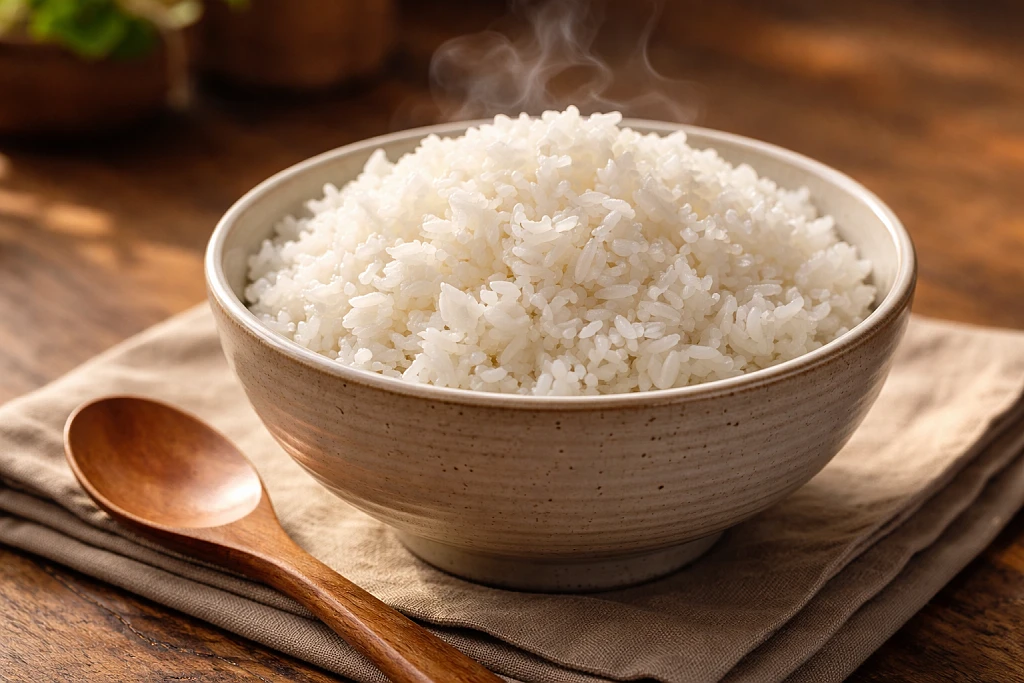
How to Cook Perfect Rice Every Time: Complete Guide for All Types
You’ve burned it. Again. Or it’s mushy. Or half the pot is crunchy while the other half is porridge. Rice seems simple, just grain and water, yet it defeats home cooks worldwide. One batch comes out perfect, the next is inedible, and you have no idea what changed.
Perfect rice isn’t luck. It’s technique how to cook perfect rice. The right water ratio, proper temperature, and knowing when to leave it alone make the difference between fluffy, separate grains and sticky disappointment. Once you understand the science, you’ll cook perfect rice every single time.
This complete guide covers every rice type (white, brown, basmati, jasmine, risotto, sushi), three cooking methods (stovetop, rice cooker, microwave), and fixes for every problem (burned, mushy, undercooked, sticky). You’ll learn the absorption method, pilaf method, and pasta method, plus restaurant secrets for extraordinary results.
By the end, you’ll have the confidence to cook any rice perfectly, whether feeding yourself on Tuesday or hosting Sunday dinner for twelve.
Let’s master this essential skill.
Understanding Rice Types and Their Uses
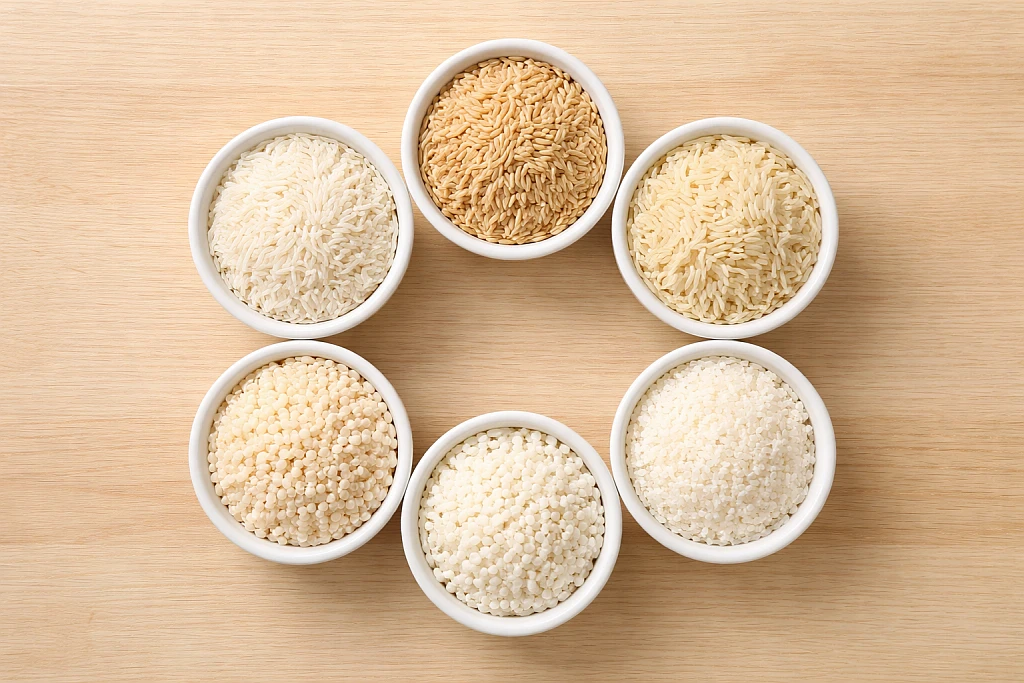
BBC Good Food explains that different rice varieties have distinct cooking requirements, long-grain stays fluffy and separate, while short-grain becomes sticky and tender.
Long-grain white rice (most common):
Examples:
Standard white rice, American long-grain
- Characteristics: Light, fluffy, separate grains
- Uses: Side dishes, stir-fries, burritos, general purpose
- Cooking time: 15-18 minutes
- Water ratio: 1 cup rice to 1.5-1.75 cups water
Basmati rice:
- Characteristics: Extra-long grains, aromatic, nutty flavour
- Uses: Indian curries, pilaf, biryani, Middle Eastern dishes
- Cooking time: 12-15 minutes
- Water ratio: 1 cup rice to 1.5 cups water
- Tip: Soak 30 minutes before cooking for extra fluffiness
Jasmine rice:
- Characteristics: Fragrant, slightly sticky, soft texture
- Uses: Thai cuisine, Asian dishes, served with curries
- Cooking time: 15-20 minutes
- Water ratio: 1 cup rice to 1.25-1.5 cups water (less than other white rice)
Brown rice:
- Characteristics: Chewy, nutty, whole grain (bran intact)
- Uses: Health-conscious dishes, grain bowls, higher fibre option
- Cooking time: 40-50 minutes (much longer than white)
- Water ratio: 1 cup rice to 2-2.5 cups water
- Health benefit: Higher fibre, more nutrients, lower GI
Arborio/Risotto rice:
- Characteristics: Short, fat grains, high starch content
- Uses: Risotto, rice pudding, creamy dishes
- Cooking: Requires constant stirring, gradual liquid addition
- Not suitable for standard absorption method
Sushi rice:
- Characteristics: Short-grain, sticky, slightly sweet
- Uses: Sushi, onigiri, Japanese dishes
- Cooking: Equal parts rice and water, seasoned with rice vinegar after cooking
Quick reference: Which rice for what?
- Everyday meals: Long-grain white rice
- Indian/Middle Eastern: Basmati
- Thai/Asian: Jasmine
- Health-conscious: Brown rice
- Risotto: Arborio
- Sushi: Sushi rice
The Perfect Stovetop Method (Absorption)
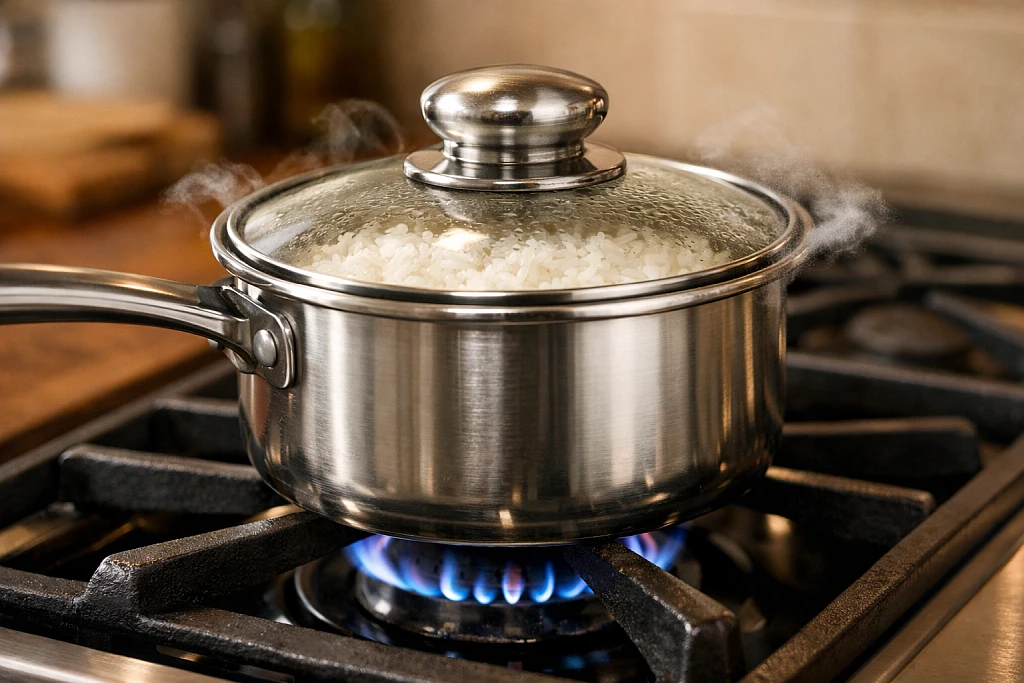
This is the gold standard method. Master this, and you’ll never need anything else.
Equipment:
- Heavy-bottomed saucepan with tight-fitting lid (prevents steam escape)
- Measuring cups
- Fork (for fluffing)
- Fine mesh sieve (for rinsing)
Step-by-step for white long-grain rice:
- Step 1: Measure rice
- Use measuring cup (1 cup uncooked rice = 3 cups cooked)
- Typical serving: 75g (½ cup) uncooked per person
- For 4 people: 2 cups uncooked rice
- Step 2: Rinse rice (critical step)
- Place rice in fine mesh sieve
- Rinse under cold running water
- Swirl with fingers while rinsing
- Continue until water runs clear (removes excess starch)
- This prevents gummy, sticky rice
- Takes 1-2 minutes, don’t skip this
- Step 3: Add water in correct ratio
- Place rinsed rice in saucepan
- Add water (see ratios below)Optional: Add pinch of salt (½ tsp per cup of rice)
- Optional: Add knob of butter or splash of oil (prevents sticking)
CRITICAL WATER RATIOS:
- White long-grain rice: 1 cup rice to 1.5-1.75 cups water
- Basmati rice: 1 cup rice to 1.5 cups water
- Jasmine rice: 1 cup rice to 1.25-1.5 cups water
- Brown rice: 1 cup rice to 2-2.5 cups water
- Start with lower amount first time, adjust next batch if needed
Step 4: Bring to boil
- Place pan on HIGH heat
- Leave UNCOVERED
- Bring to rolling boil (takes 3-5 minutes)
- Don’t stir, just wait for boil
Step 5: Reduce heat and cover (the most important step)
- IMMEDIATELY when water boils, reduce to LOWEST heat
- Cover with tight-fitting lid
- Set timer for 15 minutes (white rice) or 45 minutes (brown rice)
- DO NOT LIFT LID, no peeking, no stirring, no checking
- Steam needs to stay trapped for even cooking
- You should see slight bubbling around lid edges, hear gentle simmering
Step 6: Rest off heat
- When timer goes off, turn off heat
- KEEP LID ON
- Let rest for 10 minutes (rice continues cooking in residual heat)
- Still no peeking, patience pays off
Step 7: Fluff and serve
- Remove lid
- Use fork to gently fluff rice (breaks up clumps, releases steam)
- Slide fork in vertically, lift and turn rice from bottom to top
- Never use spoon, smashes grains
- Serve immediately
Total cooking time:
- White rice: 30 minutes (5 min boil + 15 min simmer + 10 min rest)
- Brown rice: 65 minutes (5 min boil + 45 min simmer + 15 min rest)
Rice Cooker Method (Foolproof)
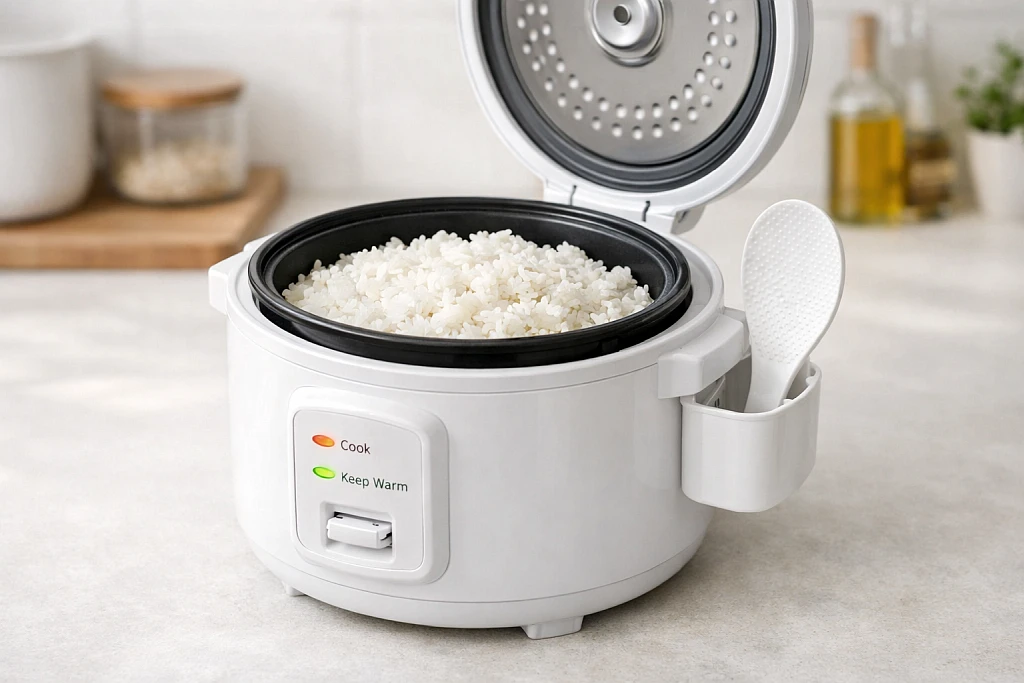
Rice cookers are designed for one job and do it perfectly every time.
Advantages:
- Completely hands-off (frees up stovetop)
- Perfect results every time (temperature sensor prevents burning)
- Keeps rice warm for hours without drying out
- Impossible to burn
- Worth buying if you eat rice weekly
How to use:
- Rinse rice until water runs clear
- Add rice to cooker inner pot
- Add water to corresponding line (cooker has markings)
- OR use knuckle method: Add water until it reaches first knuckle when finger touches rice surface
- Close lid, press ‘Cook’ button
- Wait for cooker to click to ‘Warm’ (15-20 minutes)
- Let rest 10 minutes on ‘Warm’
- Fluff with fork and serve
Pro tips:
- Most rice cookers have lines for different rice types (white, brown)
- Budget cookers (£20-40) work perfectly, no need for expensive models
- Can cook other grains (quinoa, couscous) using rice settings
- Clean immediately after use (rice dries like concrete)
Microwave Method (Quick but Not Ideal)
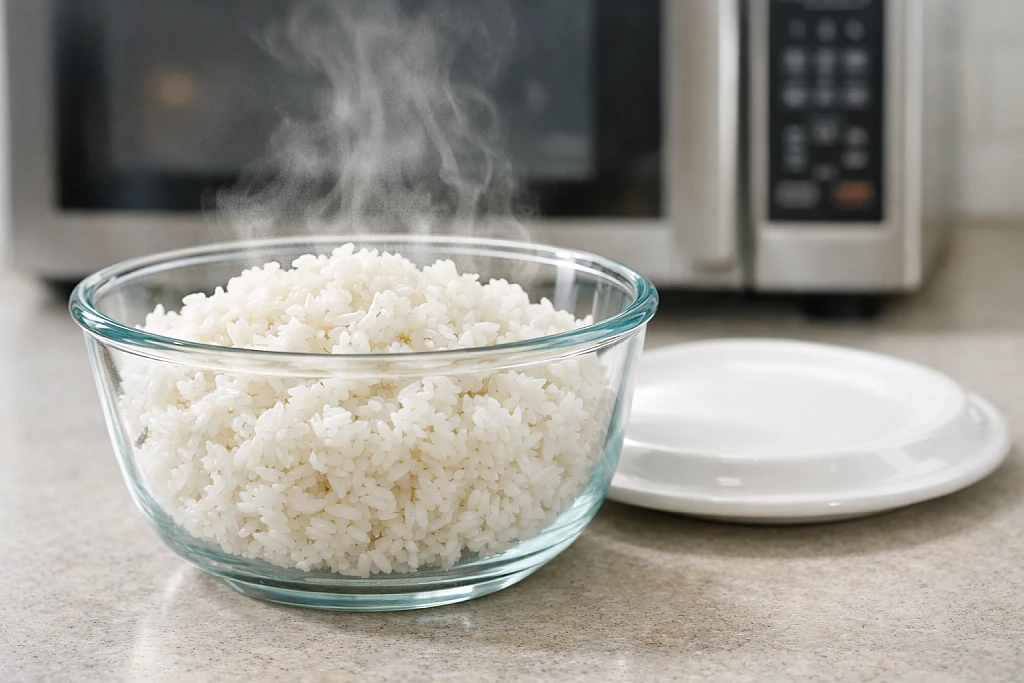
Works in a pinch, but texture isn’t quite as good as stovetop.
Method:
- Rinse 1 cup rice until water runs clear
- Place in large microwave-safe bowl (rice expands, needs room)
- Add 2 cups water
- Add pinch of salt
- Cover with microwave-safe plate (not plastic wrap, needs to vent)
- Microwave on HIGH for 10 minutes
- Microwave on MEDIUM (50% power) for 15 minutes
- Let rest covered for 5 minutes
- Fluff with fork
Caution:
- Bowl will be extremely hot, use oven gloves
- Water can superheat (sudden boiling when disturbed), handle carefully
- Results can be uneven (some parts perfect, some undercooked)
- Best for small quantities (1-2 cups uncooked)
Troubleshooting Common Rice Problems
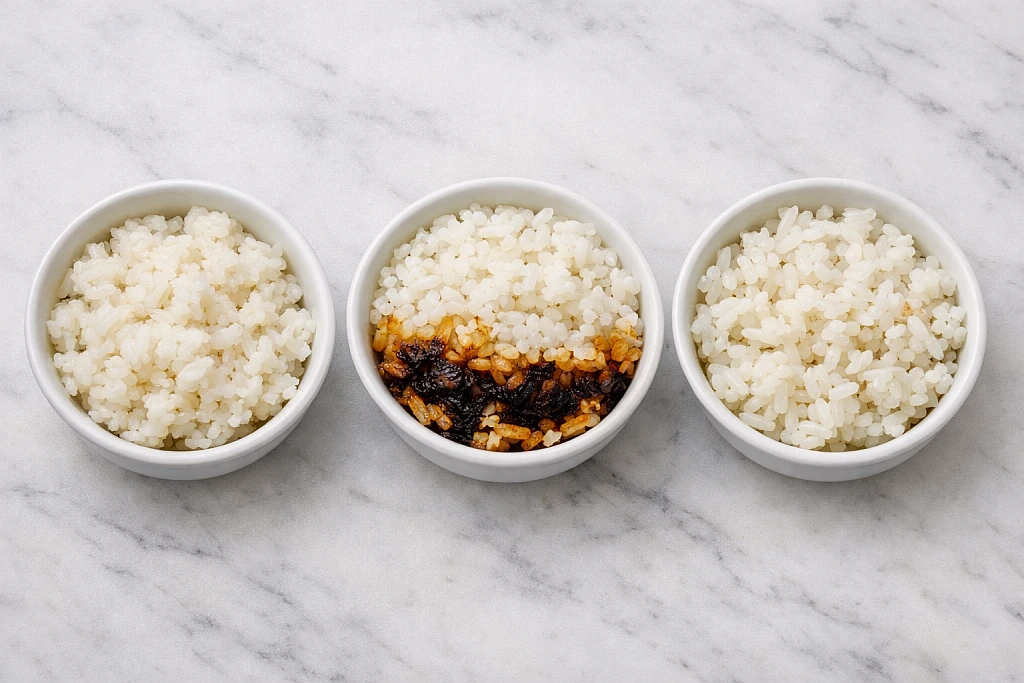
Problem: Rice is mushy/gummy
Cause: Too much water or didn’t rinse rice
Fix next time:
- Reduce water by ¼ cup
- Always rinse rice thoroughly before cooking
- Don’t stir during cooking (releases more starch)
- Problem: Rice is crunchy/undercooked
- Cause: Not enough water or didn’t cook long enough
Emergency fix:
- Add 2-3 tablespoons water
- Cover and cook 5 more minutes on low heat
- Let rest 5 minutes
Fix next time:
- Add ¼ cup more water
- Cook 2-3 minutes longer
- Ensure heat is actually on low (not medium)
- Problem: Rice is burned on bottom
- Cause: Heat too high or thin pan
Salvage:
- Remove unburned rice from top (don’t scrape bottom)
- Discard burned layer (ruins flavour if mixed in)
- Top rice is usually fine
Fix next time:
- Use heavier pan (distributes heat evenly)
- Reduce to LOWEST heat setting
- Check burner isn’t hotter than you think
- Problem: Rice is too sticky (when you wanted fluffy)
- Causes:
- Didn’t rinse rice (most common)
- Used short-grain rice by mistake
- Stirred during cooking
- Too much water
Fix next time:
- Rinse rice 5-6 times until water completely clear
- Use long-grain rice for fluffy results
- Never stir, leave it alone
- Reduce water slightly
Problem: Rice is tasteless
Solutions:
- Add salt to cooking water (½ tsp per cup of rice)
- Cook in stock instead of water (chicken, vegetable, or beef)
- Add butter or oil to cooking water
- Toast rice in dry pan for 2 minutes before adding water (nutty flavour)
- Stir in herbs after cooking (parsley, coriander, chives)
Advanced Tips for Restaurant-Quality Rice
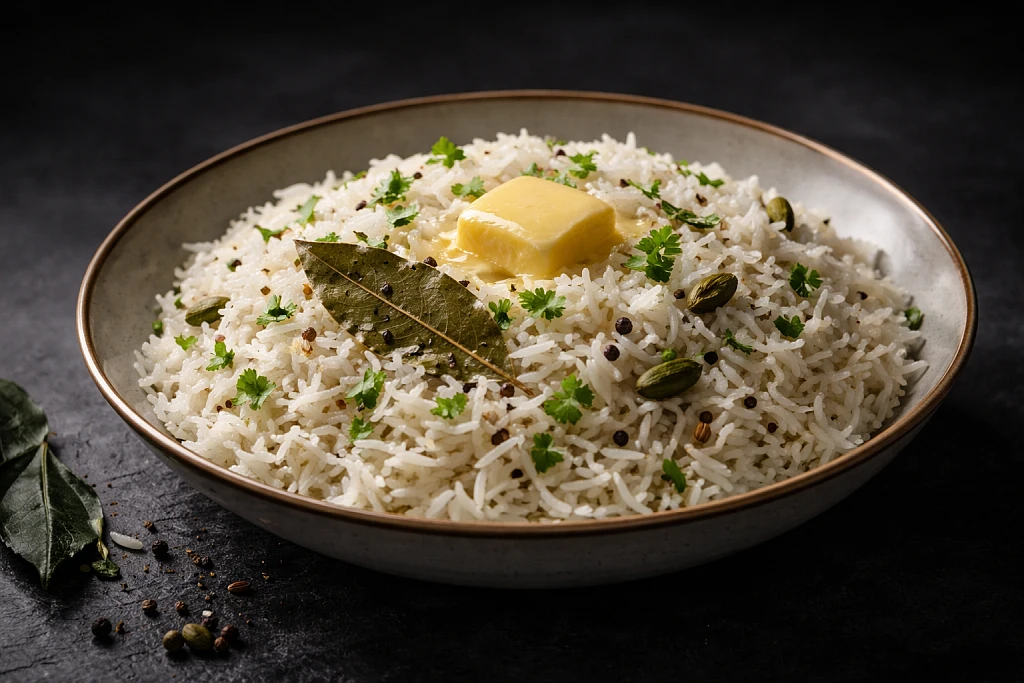
Pilaf method (toast before cooking):
- Heat 1 tbsp butter/oil in pan
- Add rinsed, drained rice
- Toast for 2-3 minutes, stirring, until fragrant
- Add hot water/stock (careful, will steam vigorously)
- Cover and cook as normal
- Result: Nuttier flavour, fluffier texture
Add aromatics:
- Bay leaf in cooking water
- Cardamom pods (2-3 for basmati)
- Cinnamon stick
- Lemon zest
- Garlic clove (whole, remove after)
- Star anise (for Asian dishes)
Cook in stock instead of water:
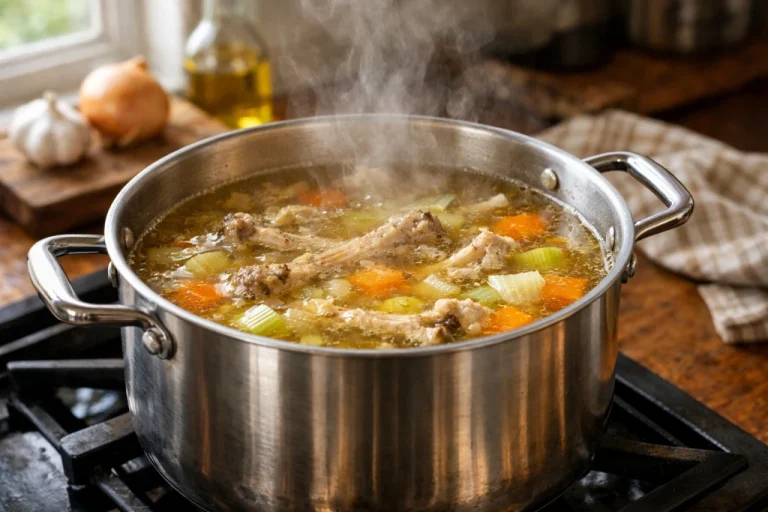
- For restaurant-quality rice, cook it in stock instead of water, homemade stock adds incredible flavour that transforms simple rice into a memorable side dish.
- Chicken stock: Works with everything
- Vegetable stock: For vegetarian dishes
- Beef stock: Rich, for heartier meals
- Use stock:water 50:50 if full stock too strong
Soak basmati rice:
- Rinse basmati thoroughly
- Soak in cold water for 30 minutes
- Drain before cooking
- Result: Extra-long, fluffy grains (authentic restaurant style)
- Reduces cooking time to 10-12 minutes
Add fat for glossy finish:
- Stir in 1 tbsp butter after cooking
- Or drizzle with olive oil
- Or coconut oil for Thai dishes
- Makes rice glossy, prevents sticking
Pasta method (foolproof but wasteful):
- Boil large pot of water (like pasta)
- Add rice
- Boil uncovered for 12 minutes (white rice) or 25 minutes (brown rice)
- Drain in sieve
- Return to pot, cover, rest 10 minutes
- Pros: Impossible to burn, no measuring
- Cons: Wastes water, loses some nutrients
Storing and Reheating Cooked Rice Safely
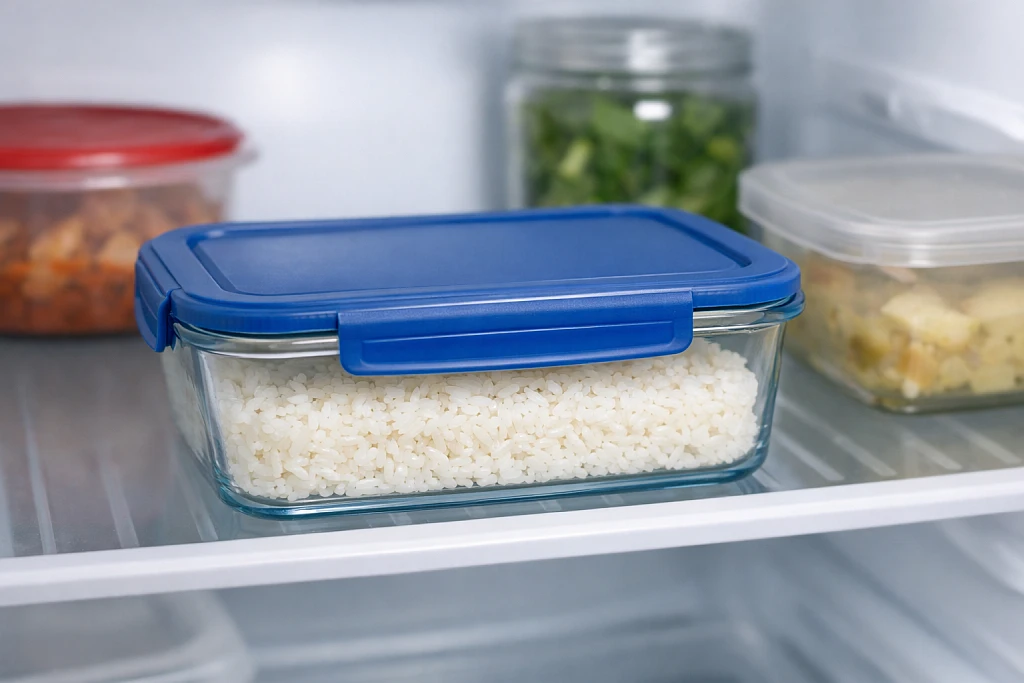
CRITICAL: Rice food safety
Rice contains Bacillus cereus spores that survive cooking. These spores multiply rapidly at room temperature, producing toxins that cause food poisoning. Proper storage is essential.
Safe storage:
- Cool rice quickly (within 1 hour of cooking)
- Spread on large plate to cool faster
- Transfer to airtight container
- Refrigerate immediately once cool
- Use within 24 hours (maximum)
- Never leave rice at room temperature for more than 2 hours
Reheating:
- Rice must be piping hot throughout (steaming)
- Never reheat more than once
- Microwave: Add 1-2 tbsp water, cover, heat 2-3 minutes, stir, heat 1 more minute
- Stovetop: Add splash of water, cover, heat gently for 5 minutes, stirring occasionally
- Stir-fry: Best method, high heat cooks rice while incorporating other ingredients
Freezing rice:
- Portion into freezer bags (flatten for quick thawing)
- Label with date
- Freeze up to 3 months
- Reheat from frozen: Microwave 3-4 minutes or thaw first
Frequently Asked Questions
Should I rinse rice before cooking?
Yes, always rinse white rice until the water runs clear. This removes excess surface starch that causes gummy, sticky rice instead of fluffy separate grains. Rinse takes 1-2 minutes and dramatically improves results. Exception: Risotto rice should NOT be rinsed, you need that starch for creamy texture. For brown rice, rinsing is optional but removes any debris.
Can I cook rice without measuring?
Yes, using the finger method: Place rice in pot, level surface. Rest index finger on top of rice. Add water until it reaches your first knuckle. This works for any quantity and most rice types. It’s not as precise as measuring but gives consistently good results. Asian families have used this method for generations, your finger is a built-in measuring tool.
What’s the difference between cheap and expensive rice?
Premium rice (basmati, jasmine) costs more but delivers superior flavour and texture, longer grains, better aroma, more consistent cooking. Budget white rice works fine for everyday meals but lacks the nuance of premium varieties. For curries or special dishes, premium rice is worth it. For burritos or meal prep, budget rice is perfectly adequate. Store brands often match name brands in quality at lower prices.
Why is my rice sticky when I wanted it fluffy?
Three main causes: (1) You didn’t rinse the rice, surface starch makes it gummy, (2) You used too much water, creates mushy texture, (3) You stirred during cooking, releases more starch. The fix: Always rinse thoroughly, use correct water ratio (1.5:1 for white rice), and resist the urge to peek or stir. Leave the lid on and trust the process.
Is brown rice healthier than white rice?
Yes, brown rice retains the bran and germ, providing more fibre (3x more than white), B vitamins, minerals, and antioxidants. It has a lower glycaemic index, meaning steadier blood sugar levels. The NHS Eatwell Guide recommends starchy carbohydrates like rice make up about one-third of your meals, providing essential energy and fibre, especially when choosing wholegrain varieties. However, brown rice takes longer to cook (45 minutes vs 15), has chewier texture, and costs more. Both are nutritious, choose based on preference.
Can I add flavourings to the cooking water?
Absolutely. Salt (½ tsp per cup) enhances flavour. Butter or oil (1 tbsp) prevents sticking and adds richness. Stock instead of water creates restaurant-quality rice. Aromatics like bay leaves, cardamom pods, or cinnamon sticks infuse subtle flavour (remove before serving). Lemon zest, garlic, or ginger work beautifully. Just maintain the same liquid ratio, if using stock, it counts as your water.
How do I know when rice is done without lifting the lid?
Trust the timer and follow the method exactly: boil, reduce to low, cover for 15 minutes (white) or 45 minutes (brown), rest 10 minutes. You’ll hear changes, vigorous boiling becomes gentle simmering, then near silence as water absorbs. If you must check: tilt pan slightly (don’t remove lid) and look for steam holes in rice surface and no standing water. But honestly, just trust the timer, lifting the lid releases steam and causes uneven cooking.
Conclusion
Perfect rice isn’t difficult, it’s about following a proven method consistently. Rinse your rice thoroughly, use the correct water ratio for your rice type (1.5:1 for white, 2.5:1 for brown), bring to a boil, reduce to lowest heat, cover, and don’t lift the lid for 15 minutes. Rest for 10 minutes, fluff with a fork, and serve.
The three keys to success: proper rinsing (removes excess starch), accurate water measurement (prevents mushy or crunchy rice), and patience (resist peeking). Master these fundamentals and you’ll never serve disappointing rice again.
Whether you prefer the stovetop method for control, a rice cooker for convenience, or even the microwave in a pinch, the principles remain the same. Start with quality rice, treat it with care, and give it time to cook properly.
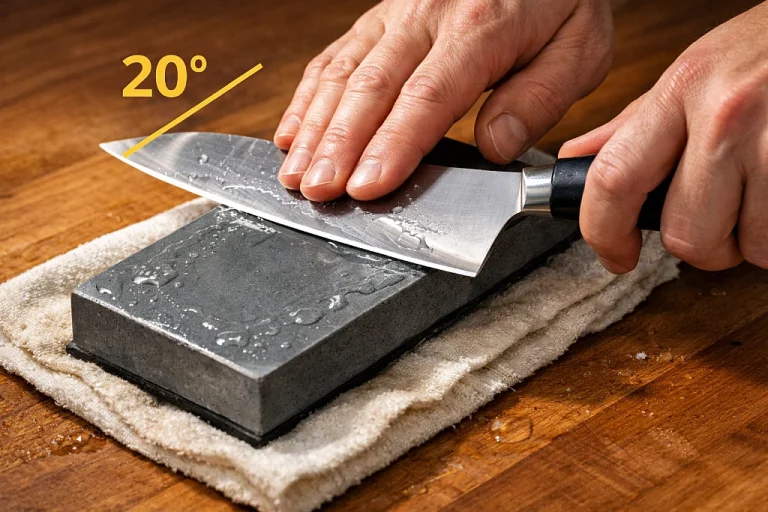
Rice is one of humanity’s oldest staple foods and billions of people cook it perfectly every day. Now you can too. Quality kitchen equipment makes cooking easier, keep your kitchen knives sharp for efficient food prep and safer cutting.
Practice makes perfect. Your first few batches will teach you how your specific stove, pots, and rice behave. Soon it’ll be second nature, and you’ll wonder why it ever seemed difficult.