
How to Fix Your Sleep Schedule in 7 Days (Science-Backed)
Staying up until 3 AM and sleeping until noon. Tossing and turning for hours every night. Feeling exhausted no matter how long you sleep. If your sleep schedule is a mess, you’re not alone. Millions of people struggle with irregular sleep patterns that leave them perpetually tired, unfocused, and frustrated.
According to the National Sleep Foundation, adults need 7-9 hours of quality sleep per night for optimal health. But when your body’s internal clock is out of sync, getting those hours becomes nearly impossible. Wondering how to fix your sleep schedule in 7 Days? The good news? You can reset your circadian rhythm and fix your sleep schedule in just one week.
This evidence-based guide will show you exactly how to reset your sleep schedule using proven scientific methods. Whether you’re dealing with jet lag, shift work disorder, or just years of bad habits, these strategies will help you fall asleep faster, wake up naturally, and feel genuinely rested. Let’s fix your sleep schedule for good.
Why Your Sleep Schedule Matters
Your sleep schedule isn’t just about convenience – it’s fundamental to your physical and mental health. The CDC reports that one in three Americans doesn’t get enough sleep, contributing to serious health problems.
Health Consequences of Poor Sleep Schedule:
- Increased risk of heart disease, diabetes, and obesity
- Weakened immune system and higher susceptibility to illness
- Memory problems and cognitive decline
- Depression and anxiety
- Decreased productivity and increased accident risk
- Premature aging and reduced lifespan
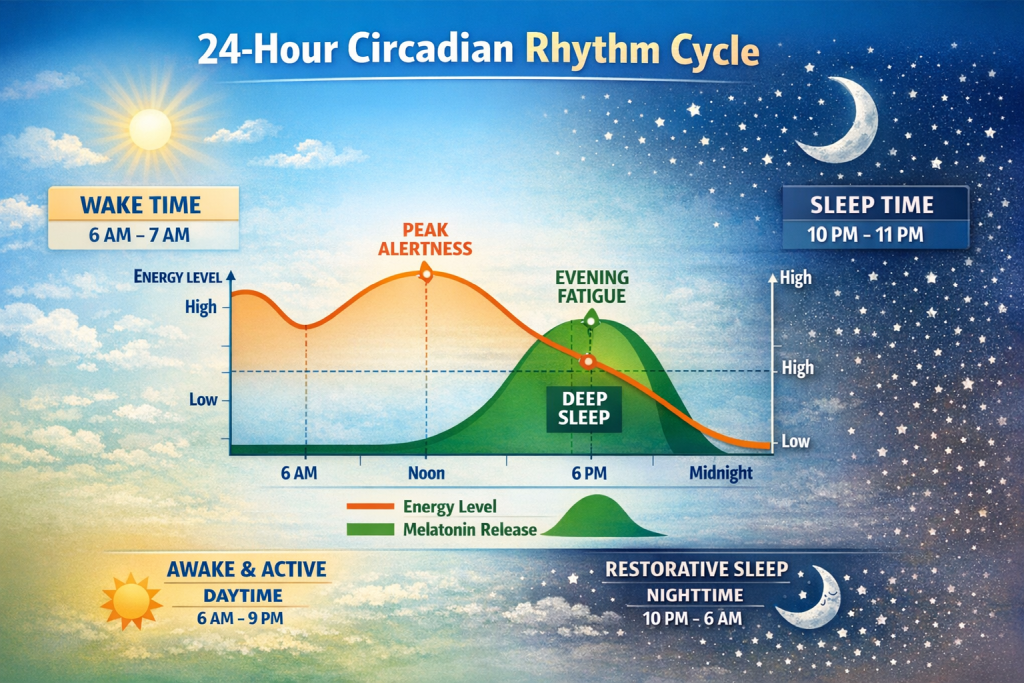
Your circadian rhythm – your body’s internal 24-hour clock – controls hormone release, body temperature, and metabolic processes. When this rhythm is disrupted by irregular sleep patterns, your entire system suffers.
Before You Begin: Understanding Your Current Schedule
Track your current sleep patterns for 2-3 days before starting this program.
Note:
- What time you actually fall asleep (not just when you go to bed)
- What time you naturally wake up (without alarms if possible)
- How you feel during the day (energy levels, focus)
- Caffeine and alcohol consumption
- Screen time before bed
This baseline helps you understand how far off your schedule is and track your progress.
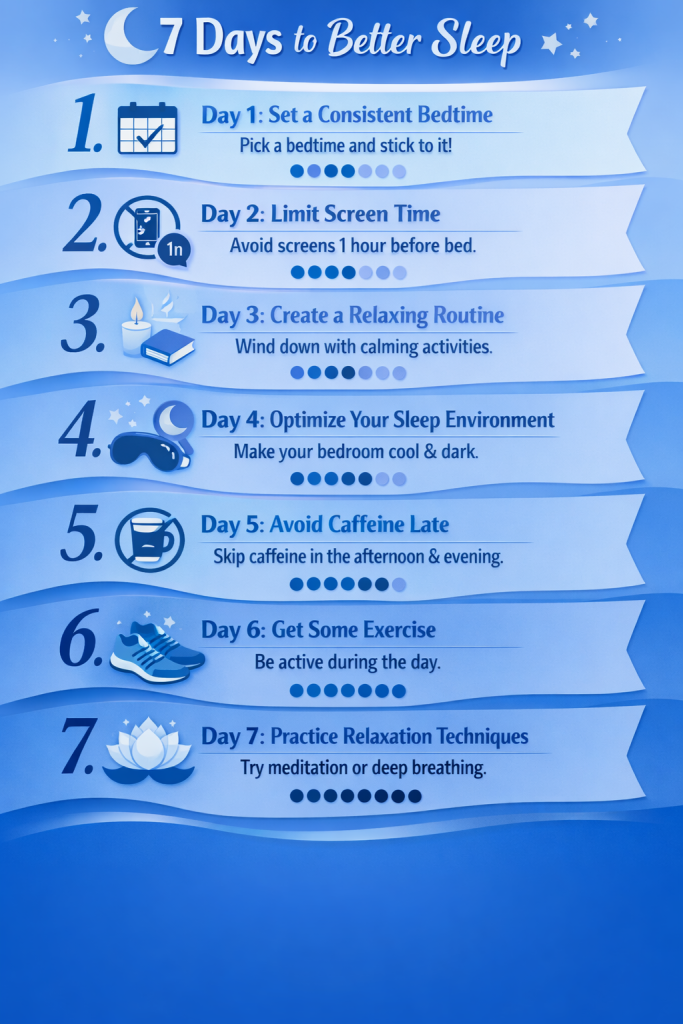
Day 1: Choose Your Target Schedule and Expose Yourself to Morning Light
Today you’ll set your target wake time and start resetting your circadian rhythm with light exposure.

Step 1: Set Your Target Wake Time
Choose a realistic wake time you can stick to every day, including weekends. Most people do best with a wake time between 6:00-8:00 AM. Count backward 7-9 hours to determine your target bedtime.
Example:
- Target wake time: 7:00 AM
- 8 hours of sleep needed
- Target bedtime: 11:00 PM
Important: Don’t try to shift your schedule by more than 1-2 hours from your current pattern on Day 1. Gradual changes are more sustainable.
Step 2: Get Bright Light Exposure Within 30 Minutes of Waking
Light is the most powerful circadian rhythm regulator. Morning sunlight tells your brain “it’s daytime” and suppresses melatonin production.
How to do it:
- Go outside for 15-30 minutes within 30 minutes of waking
- Don’t wear sunglasses (you need the light to reach your eyes)
- Natural sunlight is best, but a 10,000 lux light therapy lamp works if weather is bad
- Combine with a morning walk for extra benefit
This single action is arguably the most important step in fixing your sleep schedule. Many people notice improved alertness and better sleep within just 2-3 days of consistent morning light exposure.
Day 2: Eliminate Afternoon Caffeine and Start a Bedtime Routine
Today you’ll cut off caffeine at the right time and establish the beginning of your wind-down routine.
Cut Off Caffeine by 2 PM:
Caffeine has a half-life of 5-6 hours, meaning half of it is still in your system 5 hours after consumption. If you drink coffee at 4 PM, a quarter of that caffeine is still affecting you at 10 PM.
Rules for caffeine:
- Last caffeine by 2 PM (earlier if you’re very sensitive)
- Includes coffee, tea, energy drinks, soda, and chocolate
- Switch to decaf, herbal tea, or water after 2 PM
- Watch for hidden caffeine in medications and supplements
Start a 30-60 Minute Bedtime Routine:
Your brain needs transition time between awake and sleep states. A consistent pre-bed routine signals your body it’s time to wind down.
Sample bedtime routine:
- 10:00 PM: Turn off all screens and bright overhead lights
- 10:10 PM: Brush teeth, wash face, prepare for bed
- 10:20 PM: Light stretching or gentle yoga
- 10:30 PM: Read a physical book with dim lighting
- 10:50 PM: Lights out, in bed
If you’re lying awake for more than 20 minutes, check out our guide on how to fall asleep fast using science-backed techniques.
Day 3: Block Blue Light in the Evening
Blue light from screens suppresses melatonin production, making it harder to fall asleep. Today you’ll implement blue light blocking strategies.

Blue Light Blocking Strategies:
Level 1 (Minimum):
- Enable night mode/blue light filter on all devices at sunset
- Reduce screen brightness after 7 PM
- Stop using screens 1 hour before bed
Level 2 (Better):
- Wear blue light blocking glasses after sunset ($15-40)
- Use warm-toned lamps instead of overhead lights in evening
- Install f.lux or similar software on computers (free)
Level 3 (Best):
- No screens after 8 PM
- Replace all bedroom lighting with red bulbs (red light doesn’t suppress melatonin)
- Use blackout curtains to eliminate all external light
Pro tip: Your bedroom TV is one of the worst sleep disruptors. If possible, remove it completely or commit to not turning it on after 9 PM.
Day 4: Optimize Your Bedroom Environment
Your bedroom environment dramatically impacts sleep quality. Today you’ll create the ideal sleep sanctuary.
Temperature (Most Important):
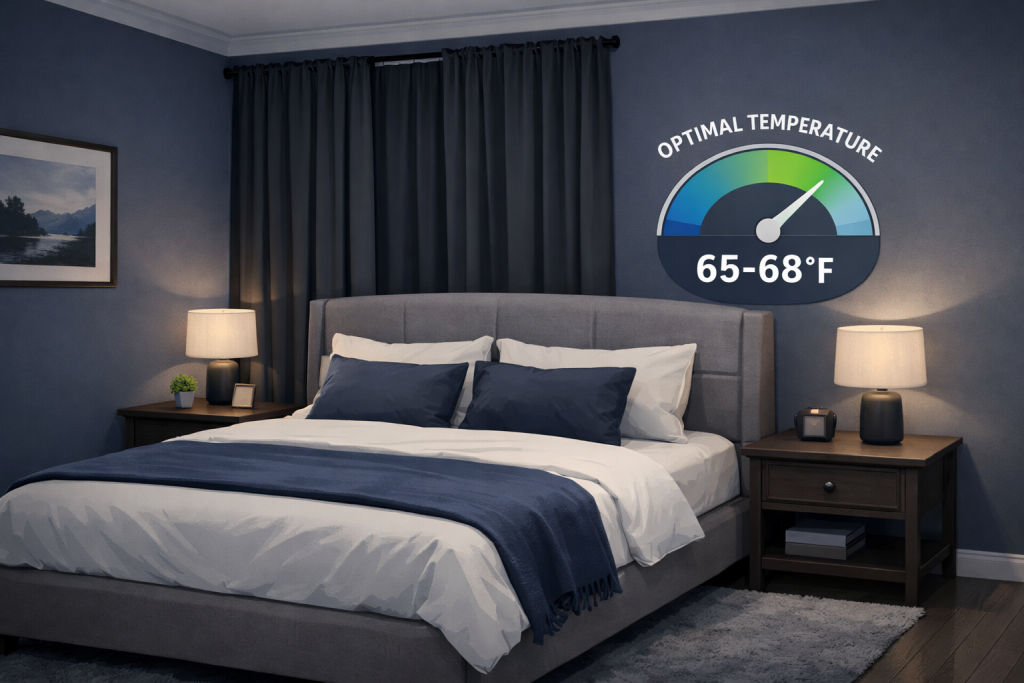
The optimal sleep temperature is 65-68°F (18-20°C). Your body temperature naturally drops as you fall asleep, and a cool room facilitates this process.
- Set thermostat to 67°F at night
- Use breathable cotton or bamboo sheets
- Consider a cooling mattress pad if you sleep hot
- Take a warm shower 60-90 minutes before bed (the subsequent cooling signals sleep time)
Darkness:
Even small amounts of light can disrupt sleep. Your bedroom should be pitch black.
- Install blackout curtains or shades
- Cover or remove LED lights from electronics (even tiny indicator lights matter)
- Use a sleep mask if complete darkness isn’t possible
- Face alarm clocks away from bed or choose one without bright display
Noise:
- Use earplugs if you live in a noisy area
- Run a fan or white noise machine to mask disruptive sounds
- Close windows if outdoor noise is an issue
Mattress and Pillows:
If your mattress is over 7-10 years old or you wake with pain, it needs replacement. A quality mattress is one of the best investments in your health.
Day 5: Exercise at the Right Time and Manage Meals
Exercise and meal timing significantly impact sleep quality. Today you’ll optimize both.
Exercise Timing:
Regular exercise improves sleep quality dramatically, but timing matters. Exercise raises body temperature and cortisol, which can interfere with sleep if done too close to bedtime.
Best practice:
- Morning exercise (6-10 AM) is ideal – reinforces wake signal
- Afternoon workout (2-6 PM) is also good
- Avoid intense exercise within 3 hours of bedtime
- Gentle yoga or stretching in the evening is fine
Meal Timing:
- Finish dinner 3 hours before bed (prevents acid reflux and blood sugar spikes)
- Avoid large meals late in the evening
- If hungry before bed, have a small snack with protein and complex carbs (banana with almond butter, Greek yogurt)
- Limit fluid intake 2 hours before bed to reduce nighttime bathroom trips
- No alcohol within 4 hours of bedtime (disrupts REM sleep and causes early waking)
Day 6: Stay Consistent and Address Sleep Anxiety
By Day 6, your body is adapting to the new schedule. Today you’ll solidify consistency and manage the mental aspects of sleep.
The Weekend Rule:
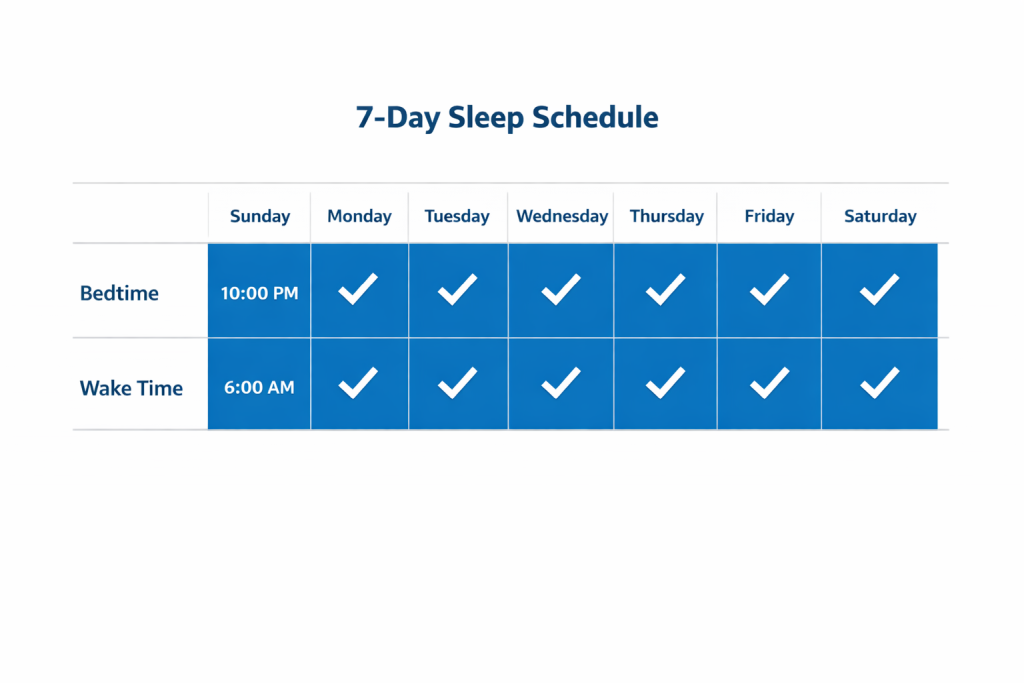
This is crucial: stick to your sleep schedule on weekends too. Sleeping in on Saturday and Sunday undoes all your progress and causes “social jet lag.”
- Wake up within 30 minutes of your weekday wake time
- If you need extra sleep, go to bed earlier Friday/Saturday night
- Don’t try to “catch up” on lost sleep by sleeping 12 hours
Managing Sleep Anxiety:
Worrying about not falling asleep creates a vicious cycle. Break it with these techniques:
• If you can’t fall asleep after 20 minutes, get out of bed and do something boring in dim light (read a dull book, fold laundry)
• Return to bed only when you feel sleepy
• Practice 4-7-8 breathing: Inhale for 4, hold for 7, exhale for 8
• Keep a worry journal – write down concerns before bed to get them out of your head
• Accept that occasional bad nights are normal – don’t catastrophize

Day 7: Fine-Tune and Commit Long-Term
Congratulations! You’ve made it through the first week. Today you’ll assess your progress and commit to maintaining your new schedule.
Assessment Questions:
• Are you falling asleep within 20-30 minutes of lying down?
• Are you waking naturally near your target time?
• Do you feel more rested during the day?
• Is your energy more consistent throughout the day?
If you answered yes to most questions:
Great! Maintain this schedule for at least 2-3 more weeks to cement the habit.
If you’re still struggling: Identify which element needs more work.
Common issues:
• Still not sleepy at bedtime → Get more morning light, increase daytime activity
• Can’t fall asleep → Review blue light exposure, caffeine timing, bedroom environment
• Waking during the night → Check temperature, noise, alcohol consumption
• Still tired despite sleeping → Consider sleep quality issues like snoring or sleep apnea
Long-Term Maintenance:
Your circadian rhythm takes 21-30 days to fully reset. Keep up these habits for at least 3 weeks before expecting perfect results.
Rules for maintaining your schedule:
• Same sleep/wake times daily (including weekends)
• Morning light exposure non-negotiable
• Bedtime routine every night
• One cheat day can throw you off for 2-3 days
• It gets easier – by week 3, your body will naturally feel sleepy at bedtime
Common Problems and Solutions
Shift Work Schedule:
If you work night shifts, the same principles apply but inverted. Use blackout curtains during your daytime sleep, get bright light exposure at the start of your shift, and maintain consistency on days off as much as possible.
Severe Insomnia:
If you’ve tried everything for 3+ weeks with no improvement, consult a doctor. You might have clinical insomnia or sleep apnea that requires medical treatment. Cognitive behavioral therapy for insomnia (CBT-I) is highly effective.
Snoring and Sleep Quality:
If snoring is disrupting your sleep or your partner’s, our guide on how to stop snoring naturally can help improve sleep quality for both of you.
Jet Lag:
These same techniques work for jet lag recovery. Start adjusting your sleep schedule 2-3 days before travel, then immediately adopt your destination’s schedule upon arrival with aggressive light exposure.
Frequently Asked Questions
Can I fix my sleep schedule faster than 7 days?
While you may notice improvements within 2-3 days, your circadian rhythm needs at least a full week to start adjusting meaningfully, and 3-4 weeks to fully reset. Trying to rush the process usually leads to inconsistency and failure. The 7-day framework gives you quick wins while setting up long-term success. Be patient – sustainable change takes time.
What if I work irregular shifts?
Rotating shift work is one of the hardest schedules to manage. Focus on light exposure at the start of each shift and darkness during your sleep time using blackout curtains. Keep your sleep environment as consistent as possible. Consider taking melatonin supplements (0.5-3mg) 30 minutes before your desired sleep time, but consult a doctor first. Some shift workers find it easier to keep a consistent night schedule even on days off.
Should I take sleep medications or supplements?
Try behavioral methods first for at least 2-3 weeks. If you need additional help, melatonin (0.5-3mg taken 30 minutes before bed) can help reset your circadian rhythm short-term. However, it’s not a sleeping pill – it works by signaling nighttime, not forcing sleep. Avoid prescription sleep medications unless absolutely necessary, as they can be habit-forming and don’t address underlying causes. Always consult your doctor before starting supplements.
Why do I wake up at 3 AM every night?
Middle-of-the-night waking usually stems from alcohol consumption, anxiety, sleep apnea, or blood sugar crashes. Check these factors: Did you drink alcohol? Are you stressed? Do you snore heavily? Did you eat a carb-heavy dinner without protein? Keep your bedroom cool (overheating causes waking) and practice relaxation techniques if you wake. If it persists beyond 3 weeks, see a doctor to rule out sleep disorders.
How much sleep do I actually need?
Most adults need 7-9 hours, but individual needs vary. You’re getting enough sleep if you wake naturally without an alarm, feel alert during the day without caffeine, and don’t crash on weekends. Under-sleeping is more common than over-sleeping. If you regularly need 10+ hours, consult a doctor – this can indicate an underlying health issue or poor sleep quality rather than genuine high sleep needs.
Can naps help or hurt my sleep schedule?
Naps can help if done correctly: 20-30 minutes maximum, before 3 PM only, and not daily. Longer naps or naps after 3 PM reduce sleep pressure at night, making it harder to fall asleep at bedtime. If you’re fixing your sleep schedule, avoid naps entirely for the first 2 weeks – push through daytime tiredness to build strong sleep pressure for nighttime. Once your schedule is established, strategic short naps are fine.
Is it bad to use my phone as an alarm clock?
Using your phone as an alarm isn’t inherently bad, but it creates temptation to check notifications, emails, or social media right before bed and immediately upon waking. Both habits disrupt sleep quality and stress your circadian rhythm. Invest in a dedicated alarm clock ($15-30) and leave your phone charging outside the bedroom. If you must use your phone, enable Do Not Disturb, place it face-down across the room, and resist checking it for 30 minutes after waking.
Conclusion
Fixing your sleep schedule is one of the most impactful changes you can make for your health, productivity, and quality of life. While it requires commitment and consistency, the results are worth it: better focus, stable mood, stronger immunity, and genuine energy throughout the day.
The key principles are simple: consistent timing, morning light exposure, evening darkness, and a cool sleep environment. Start with these fundamentals before worrying about expensive gadgets or supplements. Your body wants to sleep on a regular schedule – you just need to remove the obstacles and reinforce the natural signals.
Remember that the first week is the hardest. By Day 10-14, your new schedule will feel increasingly natural. By Day 21, your body will automatically feel sleepy at bedtime and wake naturally in the morning. Commit to the full 3 weeks, and you’ll establish a sleep pattern that serves you for life.