How to Jump Start a Car Safely: Complete Step-by-Step Guide
You turn the key. Nothing. Not even a click. Your dashboard lights are dim or completely dead. You’ve got a flat battery, and you need to get moving. Whether you left the headlights on, it’s freezing cold, or your battery is simply old, knowing how to jump start a car safely can save you hours of waiting for roadside assistance.
The AA recommends learning how to jump start a car safely as an essential skill for all drivers, dead batteries are the most common cause of roadside breakdowns in the UK. Yet many people either don’t know the correct procedure or, worse, use dangerous shortcuts that risk battery explosion, vehicle damage, or injury.
This complete guide shows you exactly how to jump start a car safely using jump leads, a portable jump starter, or even push starting a manual car. You’ll learn the critical cable connection order (getting this wrong can cause thousands in damage), safety checks before you start, and what to do after a successful jump.
Let’s get your car running again.
What You’ll Need
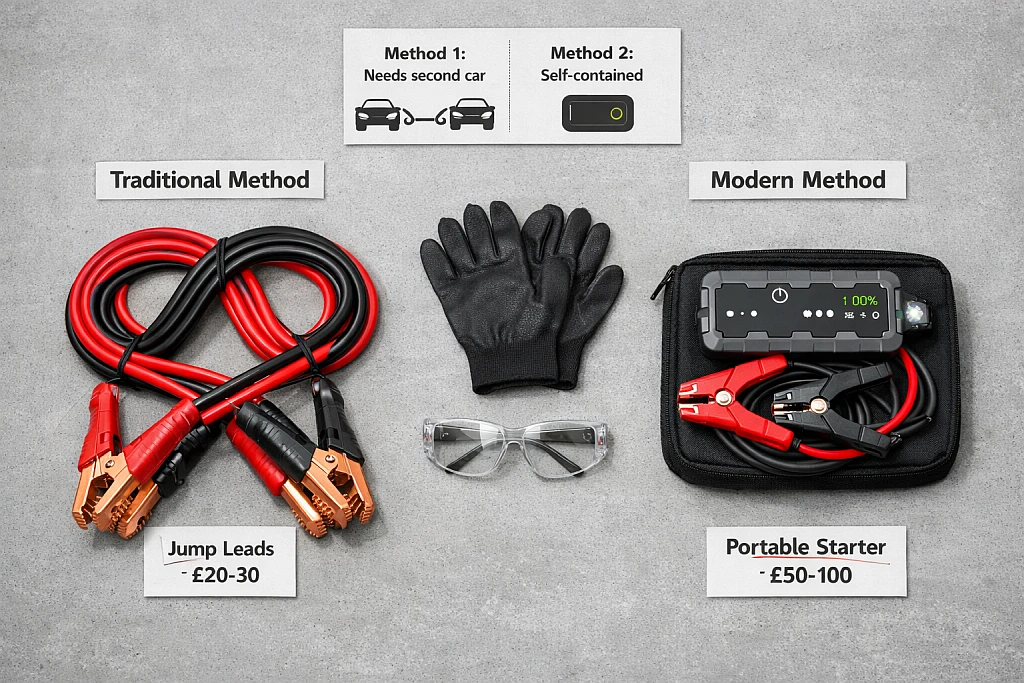
Method 1:
- Using another car (most common)
- Jump leads (jumper cables) – minimum 16mm² thickness, 3-4 metres long (£15-30)
- Another vehicle with working battery (ideally similar voltage – 12V car to 12V car)
- Both vehicles must use same voltage system (don’t jump 12V with 24V)
Method 2:
- Portable jump starter (easiest, safest)
- Portable lithium jump starter pack (£50-100)
- Pre-charged and ready to use
- No other vehicle needed
- Includes built-in safety features (reverse polarity protection)
- Can also charge phones/devices
Optional but helpful:
- Gloves (protect from battery acid)
- Safety glasses (protect from sparks)
- Torch (if dark)
- Owner’s manual (battery location varies)
- Critical Safety Warnings (READ THIS FIRST)
- Following RAC safety guidelines is crucial, incorrect jump start procedures can cause battery explosion, electrical damage, or serious injury.
Never jump start if:
- Battery is cracked, leaking, or bulging (risk of explosion)
- You smell rotten eggs or see smoke (battery fault)
- Battery terminals are heavily corroded (white/blue powder)
- It’s an electric or hybrid vehicle without checking manual first
- Battery is frozen solid (wait for it to thaw)
- Vehicle has exposed electrical components or wiring damage
Always:
- Ensure both vehicles are in Park/Neutral with handbrakes on
- Turn off all electrical accessories (lights, radio, heating)
- Remove metal jewelry (rings, watches) before touching cables
- Keep cables away from moving parts (fans, belts)
- Never let positive and negative cable clamps touch each other
- Don’t smoke or have open flames near batteries (hydrogen gas risk)
Step-by-Step: Jump Starting with Cables
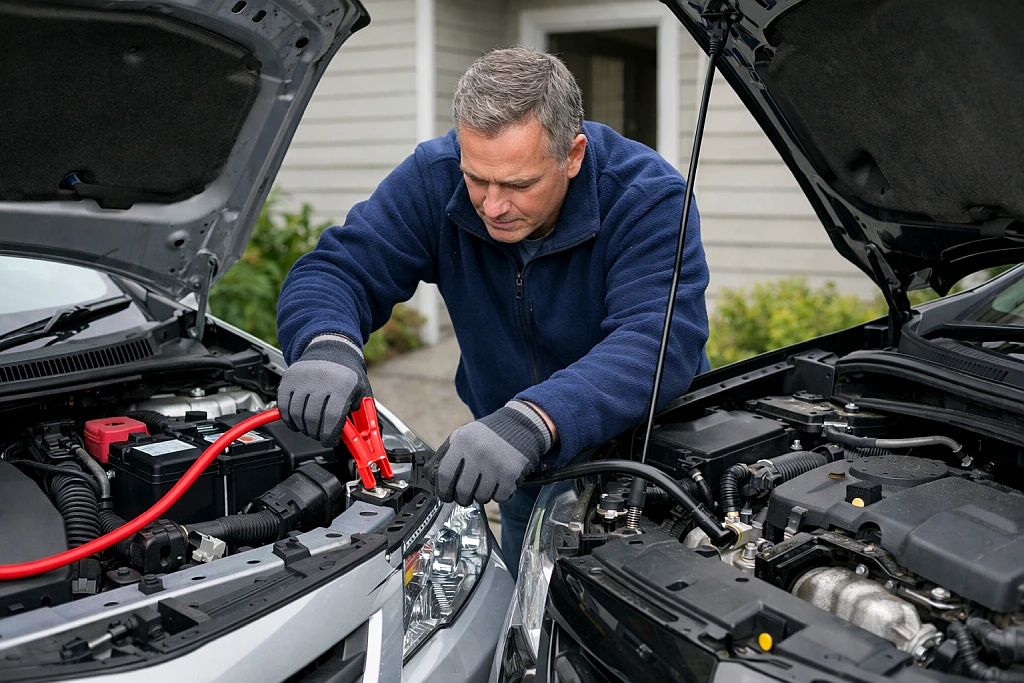
Step 1: Position the vehicles
- Park the working vehicle close enough for cables to reach both batteries
- Vehicles should NOT touch each other
- Front-to-front is easiest (batteries usually at front)
- Apply handbrakes on both vehicles
- Put both in Park (automatic) or Neutral (manual)
- Turn OFF both engines
- Turn off all electrical accessories in both cars
Step 2: Identify battery terminals
- Locate batteries in both vehicles (check under bonnet, sometimes in boot)
- Identify positive (+) terminal – usually red cover or ‘+’ symbol
- Identify negative (-) terminal – usually black cover or ‘-‘ symbol
- Clean terminals if heavily corroded (use wire brush or cloth)
- Ensure terminals are dry
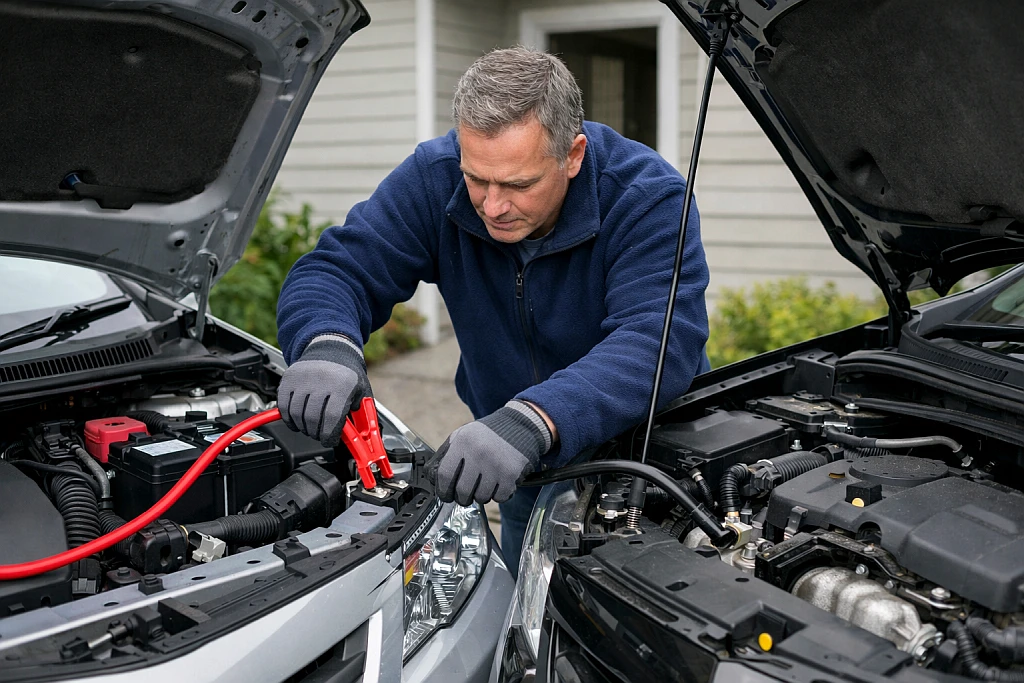
Step 3: Connect cables in EXACT order (critical!)
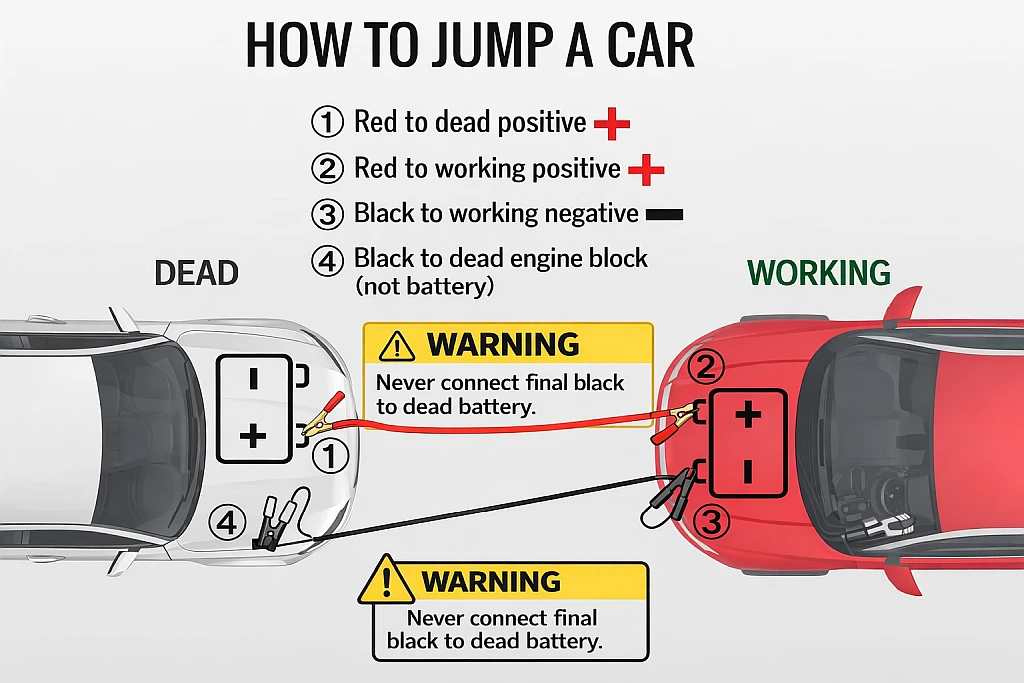
- This order prevents sparks near battery and potential explosion:
- 1st: RED cable to POSITIVE (+) terminal on DEAD battery
- 2nd: Other end of RED cable to POSITIVE (+) terminal on WORKING battery
- 3rd: BLACK cable to NEGATIVE (-) terminal on WORKING battery
- 4th: Other end of BLACK cable to UNPAINTED METAL on dead car’s engine block (NOT negative terminal)
Why not negative terminal on dead battery?
Sparks occur when making final connection. Connecting to engine block (away from battery) prevents igniting hydrogen gas from battery.
Good earth points:
- Engine mounting bolt
- Alternator bracket
- Unpainted metal part of engine block
- Avoid: moving parts, fuel lines, painted surfaces
Step 4: Start the working vehicle
- Start the engine of the working vehicle
- Let it run for 3-5 minutes at normal idle
- Optional: Gently rev to 2,000 RPM for 30 seconds (charges faster)
- This charges the dead battery through the cables
Step 5: Start the dead vehicle
- Turn the key in the dead vehicle
- It should start immediately or within a few seconds
- If it doesn’t start after 30 seconds, STOP (don’t burn out starter motor)
- Wait 2-3 minutes and try again
- If still won’t start after 3 attempts, problem is more serious than dead battery
Step 6: Remove cables (REVERSE order)
Both engines should be running
Remove cables in exact reverse order of connection:
- 1st: BLACK cable from engine block (dead car)
- 2nd: BLACK cable from negative terminal (working car)
- 3rd: RED cable from positive terminal (working car)
- 4th: RED cable from positive terminal (dead car)
- Be careful not to let cable clamps touch each other or car body while removing
What to Do After Jump Starting
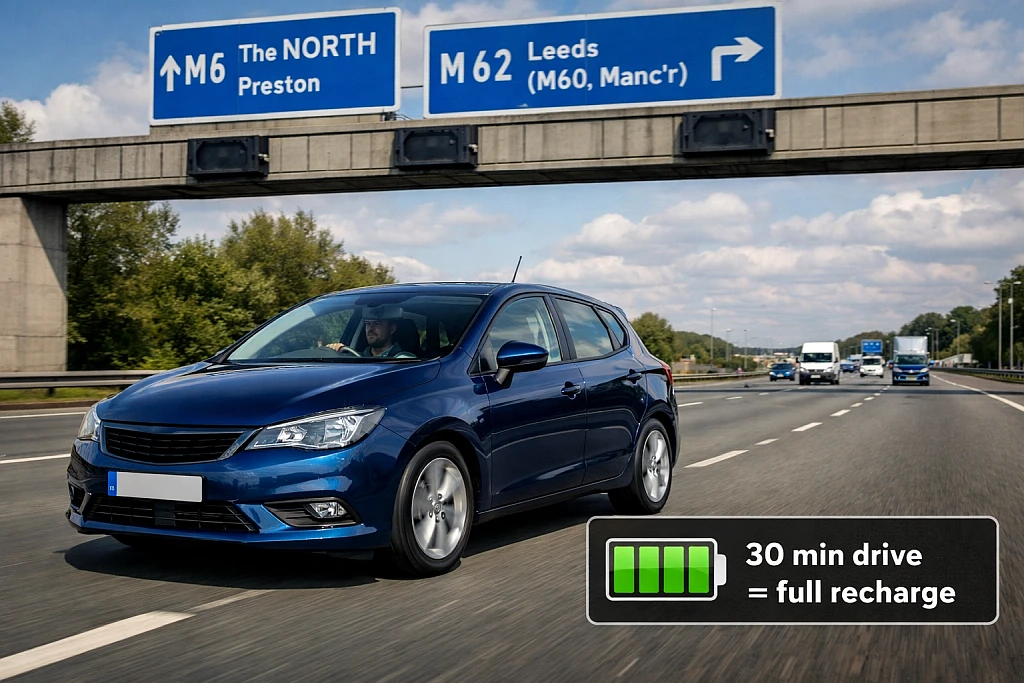
Immediately after jump start:
- Don’t turn off the engine for at least 20-30 minutes
- Drive the car (don’t just idle) – alternator charges better when moving
- Motorway driving for 30 minutes is ideal
- Turn off unnecessary electrical loads initially (heated seats, AC)
- Monitor dashboard for warning lights (battery, alternator)
Within next 24 hours:
- Take the car for long drive (20-30 miles) to fully recharge battery
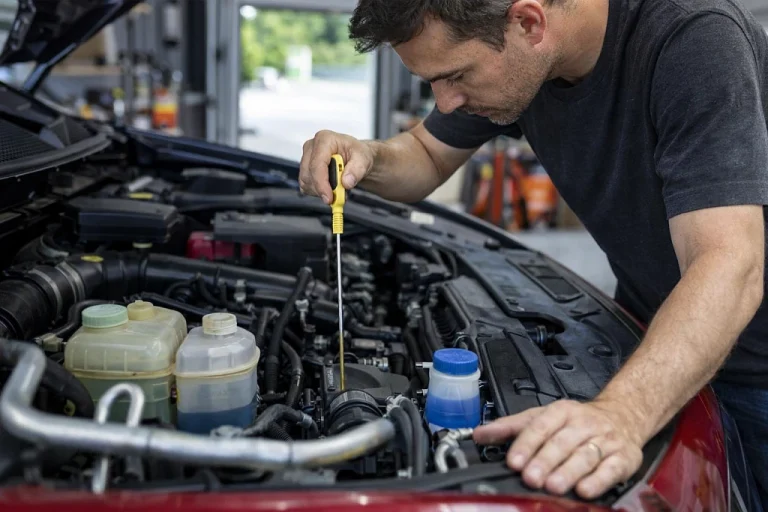
- After jump starting, it’s wise to check all vital fluids while the bonnet is open—low battery electrolyte or other fluid issues may have contributed to the problem.
- Check battery terminals aren’t loose or corroded
- Test if car starts normally next morning
- If battery dies again within days:
- Battery may be old and needs replacing (typically 3-5 year lifespan)
- Alternator may not be charging properly (test at garage)
- Parasitic drain – something drawing power when car is offGet professional diagnosis
Using a Portable Jump Starter (Easier Method)
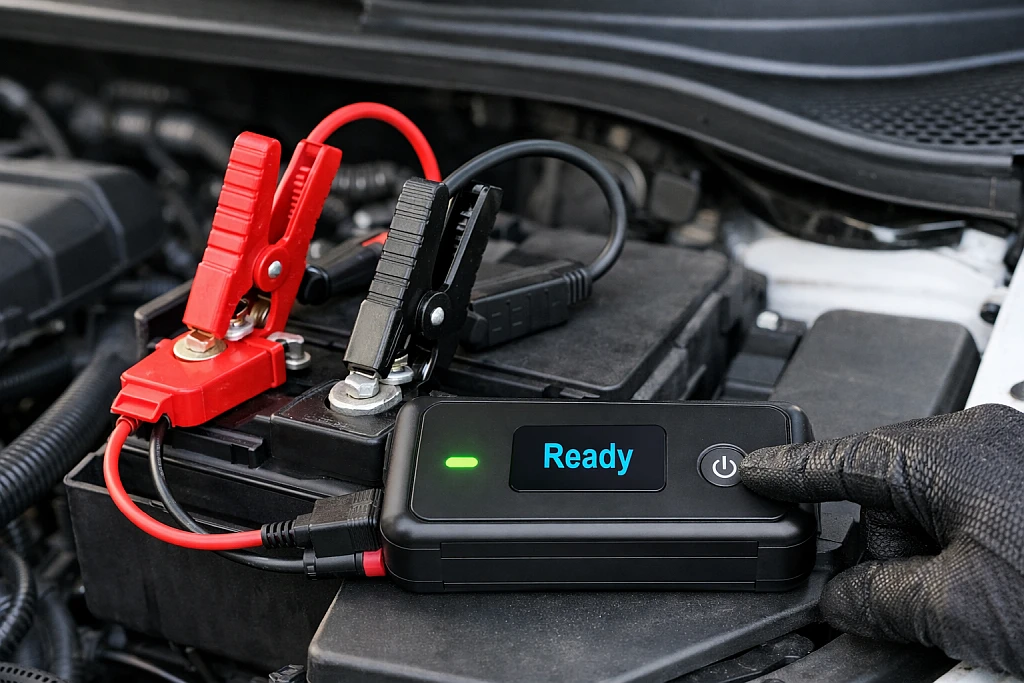
Portable jump starters are safer and more convenient than traditional cables.
Advantages:
- No second vehicle needed
- Built-in reverse polarity protection (won’t work if connected wrong)
- Compact and easy to store in car
- Can also charge phones, tablets, laptops
- Usually includes built-in torch
- One-time purchase (£50-100) vs. waiting for breakdown service
How to use:
- Ensure jump starter is charged (charge monthly even if not used)
- Turn off all vehicle electrics
- Connect RED clamp to positive (+) terminal on dead battery
- Connect BLACK clamp to negative (-) terminal on dead battery
- Turn on jump starter (if it has power switch)
- Wait 30-60 seconds for power to stabilize
Start your car
- Once running, disconnect jump starter (reverse order)
- Recharge jump starter when you get home
Recommended models:
- Budget (£40-60): NOCO Boost Sport GB20, Halfords own brand
- Mid-range (£60-90): NOCO Boost Plus GB40, Anker Roav
- Premium (£90-150): NOCO Boost HD GB70 (for larger engines, diesels)
Emergency: Push Starting a Manual Car
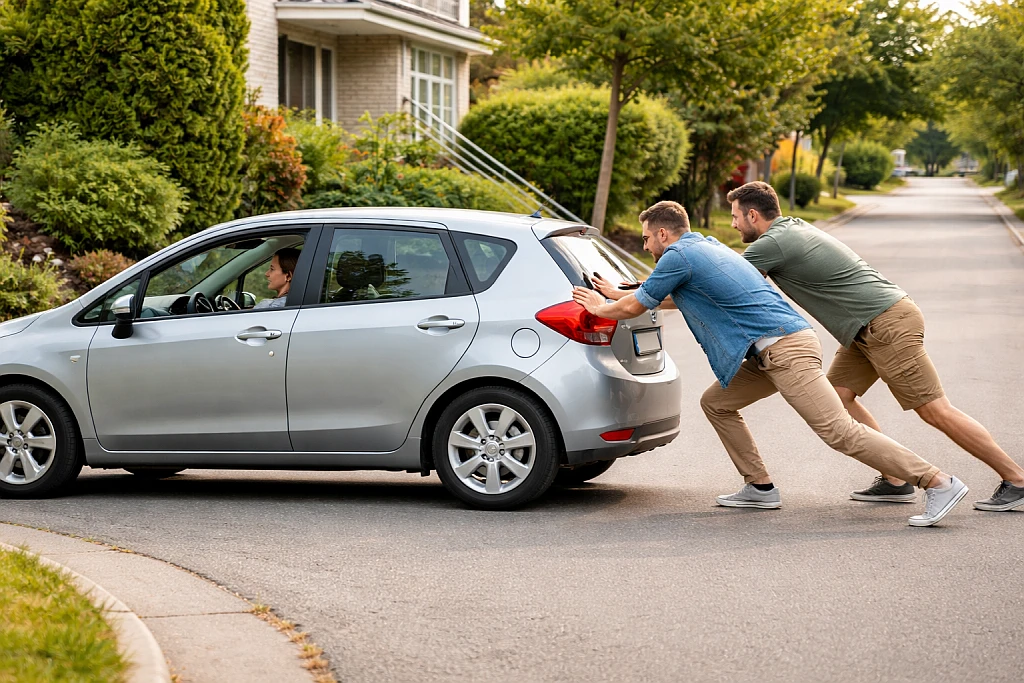
Requirements:
- Manual transmission only (won’t work on automatics)
- Slight downhill slope OR 2-3 people to push
- Enough battery power for ignition system (won’t work if completely flat)
- Safe, clear area to roll
Procedure:
- Turn ignition to ON position (not start)
- Press clutch fully and put car in 2nd gear (1st is too jerky)
- Release handbrake
- Get car rolling to 5-10 mph (push or roll downhill)
- Quickly release clutch while keeping foot on accelerator
- Engine should turn over and start
- Immediately press clutch to stop car jerking
- Keep engine running, apply handbrake
Important notes:
- Not recommended for cars with catalytic converters (can damage them)
- Don’t try if timing belt is old (compression can break it)
- Can be harsh on transmission—only use as last resort
- Modern cars with complex electronics may not respond well
Preventing Dead Batteries
Common causes of dead batteries:
- Leaving lights on (headlights, interior lights, boot light)
- Old battery (3-5 years typical lifespan)
- Extreme cold weather (reduces battery capacity by 30-50%)
- Short journeys only (alternator doesn’t fully recharge)
- Faulty alternator (not charging battery while driving)
- Parasitic drain (faulty component drawing power when off)
- Corroded or loose terminals (poor connection)
Prevention tips:
- Always double-check lights are off when leaving car
- Drive car regularly (at least 20 minutes weekly)
- Take longer drives occasionally to fully recharge
- Keep battery terminals clean and tight
- Test battery health annually (free at most garages)
- Replace battery proactively at 4-5 years old
- Use trickle charger if car sits unused for weeks
- Preventing future dead batteries starts with proper car maintenance, regular oil changes and keeping your engine in good condition reduce electrical system strain.
Troubleshooting: When Jump Starting Doesn’t Work
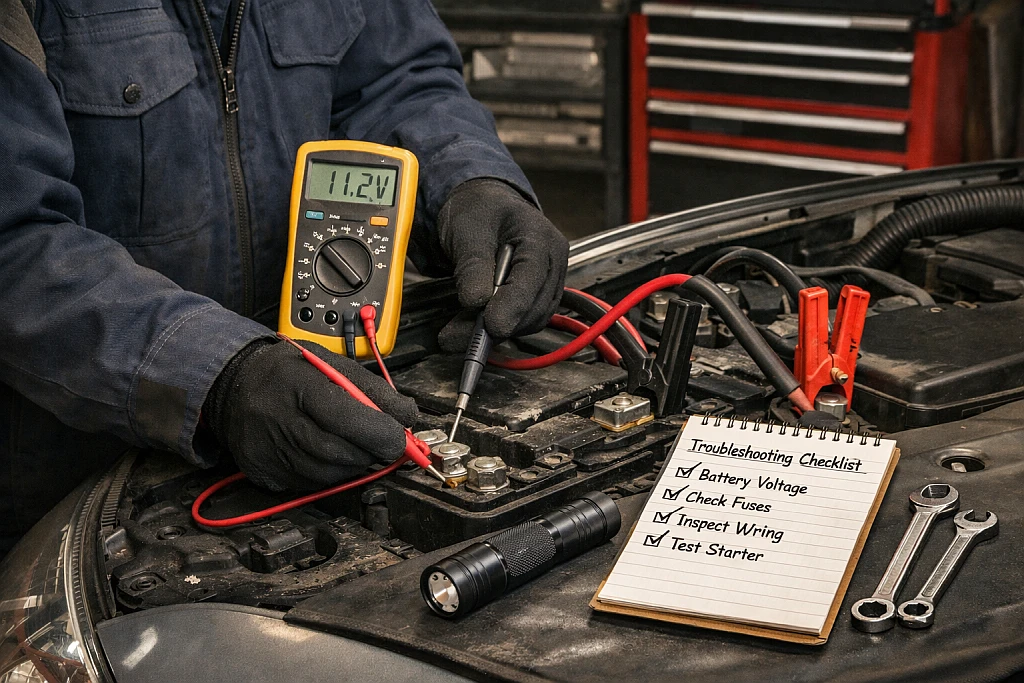
Car still won’t start after jump:
Check cable connections: Ensure clamps have good metal-to-metal contact, not just touching painted surfaces
- Wait longer: Very dead batteries need 5-10 minutes of charging before starting attempt
- Try different earth point: Move black cable to different unpainted metal surface
- Check for blown fuses: Main fuse may have blown
Starter motor just clicks:
- Battery is very flat, charge longer or battery is completely dead
- Starter motor fault (needs replacement)
- Loose battery terminal connections
No sound at all (no clicks, no dashboard lights):
- Battery completely dead or faulty
- Cables not properly connected
- Main battery fuse blown
- Broken alternator belt (can’t charge)
Engine cranks but won’t fire:
- This isn’t a battery problem, likely fuel or ignition issue
- Check fuel level (gauge may be faulty)
- Listen for fuel pump priming when ignition turned on
- May need professional diagnosis
Frequently Asked Questions
Can I jump start an automatic car?
Yes, jump starting works exactly the same for automatic and manual cars when using jump leads or a portable starter. The only difference is that automatic cars cannot be push started, that method only works with manual transmission vehicles. Always ensure the automatic is in Park (P) before attempting a jump start.
What happens if I connect jump leads the wrong way?
Connecting leads incorrectly (reverse polarity) can cause serious damage: blown fuses, damaged alternator, fried electronics, or even battery explosion. If you realize the mistake before starting, simply disconnect immediately in reverse order. If you’ve already tried starting, check all fuses and have electronics professionally tested. This is why portable jump starters with built-in reverse polarity protection are safer.
How long should I run the car after jump starting?
Drive for at least 20-30 minutes immediately after jump starting, preferably on a motorway or dual carriageway where the engine runs at higher RPM. This allows the alternator to significantly recharge the battery. Idling charges very slowly. For a fully depleted battery, you may need several longer drives over the next day to restore full capacity.
Can you jump start a completely flat battery?
Usually yes, but it takes longer. Let the working car run for 5-10 minutes before attempting to start the dead car. Very old or damaged batteries that have been flat for weeks may be permanently damaged and unable to hold charge even after jump starting. If the battery won’t start after 10 minutes of charging through cables, it likely needs replacement.
Is it safe to jump start in the rain?
It’s generally safe if you’re careful to keep connections dry. Water conducts electricity and increases shock risk. If possible, wait for rain to stop or move cars under shelter. If you must proceed in rain, ensure battery terminals and cable connections are wiped dry before connecting, avoid standing in puddles, and wear rubber-soled shoes and gloves for extra protection.
Can you jump start a diesel car with a petrol car?
Yes, as long as both are 12V systems (standard in cars). However, diesel engines require more cranking power due to higher compression, so the donor car should be running and ideally have a similar or larger engine size. Small petrol cars may struggle to jump large diesel vehicles. For large diesels, a portable jump starter rated for diesel engines (800+ amps) is more reliable.
Should I replace my battery after jump starting?
Not necessarily if it’s a one-off incident (you left lights on). However, if the battery is 3+ years old, repeatedly goes flat, or struggles to hold charge after a good drive, it’s nearing end of life and should be replaced. Have it tested at a garage (usually free)—they’ll measure voltage and cranking amps to determine health. Prevention is cheaper than being stranded.
Conclusion
Knowing how to jump start a car safely is an essential skill that can save you hours of inconvenience and the cost of breakdown services. The process is straightforward: connect cables in the correct order (positive on dead, positive on working, negative on working, negative to earth), run the donor car for a few minutes, start the dead car, then disconnect in reverse order.
The key to safety is getting the cable sequence right and never connecting the final negative cable directly to the dead battery’s negative terminal, always use an unpainted metal earth point on the engine block. This prevents sparks near the battery and potential explosion.
For maximum convenience and safety, invest in a portable jump starter (£50-100). It eliminates the need for another vehicle, includes built-in safety features, and can save you multiple times over its lifetime while also serving as a phone charger and torch.
After a successful jump start, drive for 30 minutes to recharge the battery, and monitor whether the problem recurs. Regular maintenance, checking terminals, and replacing batteries every 4-5 years prevents most dead battery situations.
Keep jump leads or a portable starter in your car. You’ll appreciate having them at 3am in a car park or on a cold winter morning. Safe travels.