How to Remove Hard Water Stains: 7 Easy Methods
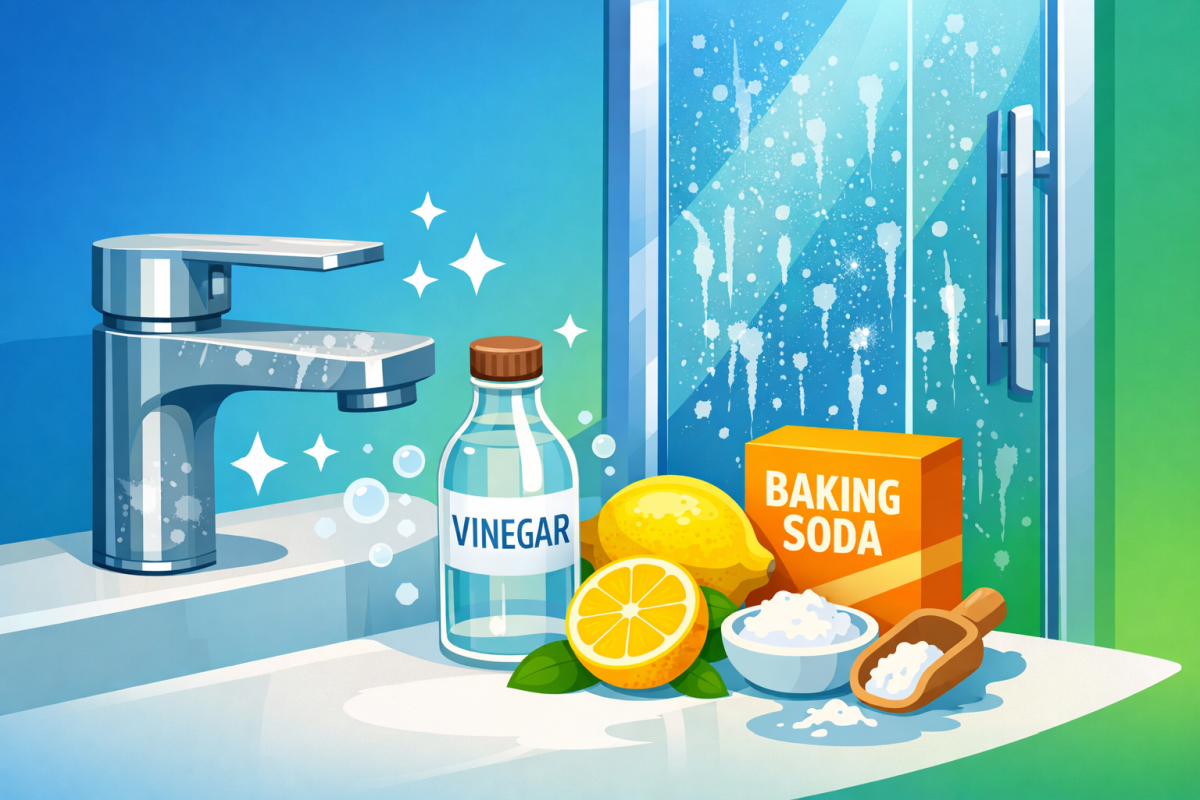
Those stubborn white, chalky spots covering your faucets, shower doors, and bathroom fixtures aren’t just unsightly – they’re hard water stains, and they’re notoriously difficult to remove with regular cleaners. If you’ve ever scrubbed endlessly with little result, you’re not alone. Hard water stains are one of the most frustrating cleaning challenges homeowners face. Wondering how to remove hard water stains? The good news? You don’t need harsh chemical cleaners or expensive specialized products. With simple household items like vinegar, lemon juice, and baking soda, you can effectively dissolve those mineral deposits and restore the shine to your bathroom and kitchen fixtures.
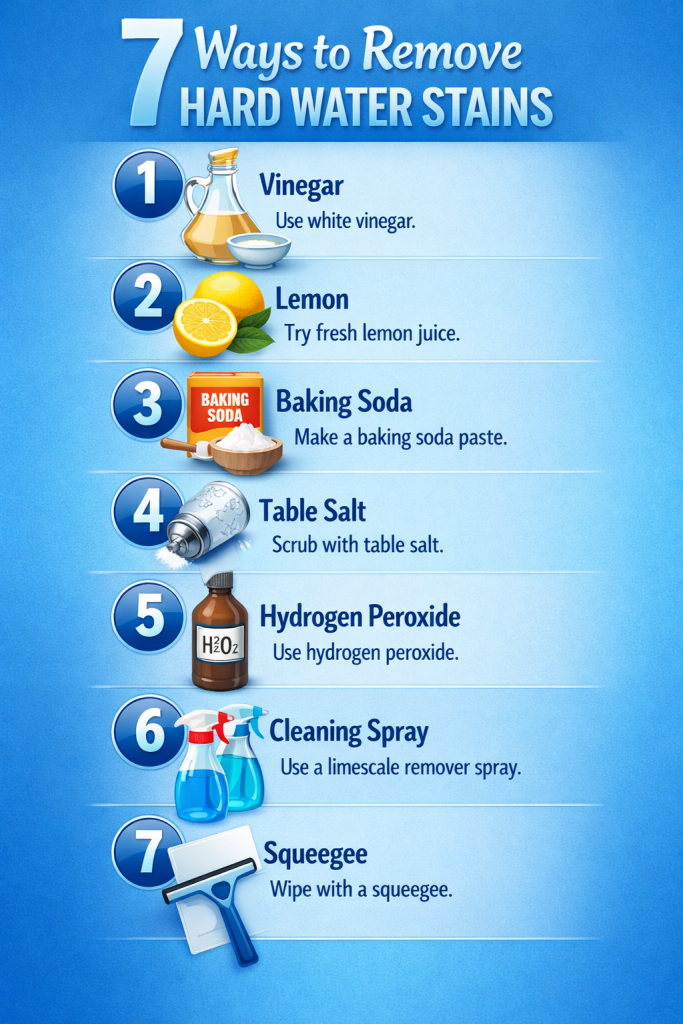
This complete guide will show you 7 proven methods to remove hard water stains from any surface, plus prevention tips to keep them from coming back. Let’s get your fixtures sparkling again.
What Causes Hard Water Stains?
Understanding what you’re fighting helps you clean it more effectively. According to the EPA, hard water contains high levels of dissolved minerals, primarily calcium and magnesium. When hard water evaporates from surfaces, these minerals are left behind as white, crusty deposits.
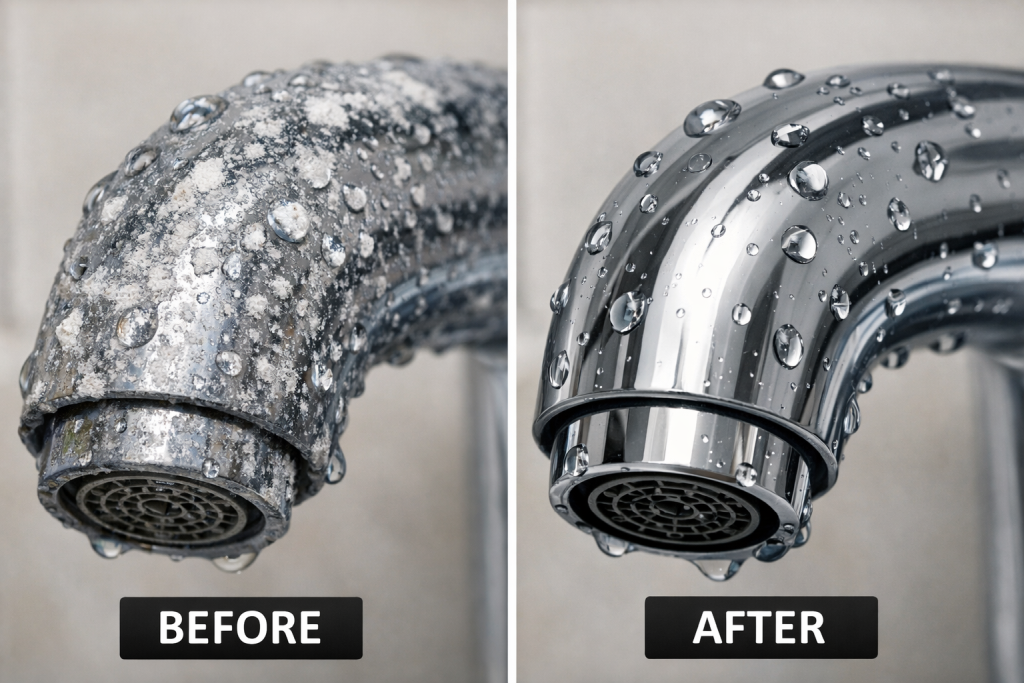
Where Hard Water Stains Appear Most:
- Faucets and fixtures (especially around the base and aerator)
- Glass shower doors and enclosures
- Shower heads (clogging spray holes)
- Sinks and bathtubs
- Toilet bowls (waterline rings)
- Dishes and glassware from dishwasher
- Tile grout in bathrooms
The severity of hard water staining depends on your water’s mineral content. Areas with very hard water (over 180 mg/L of minerals) will see rapid buildup, while moderately hard water takes longer to create visible stains.
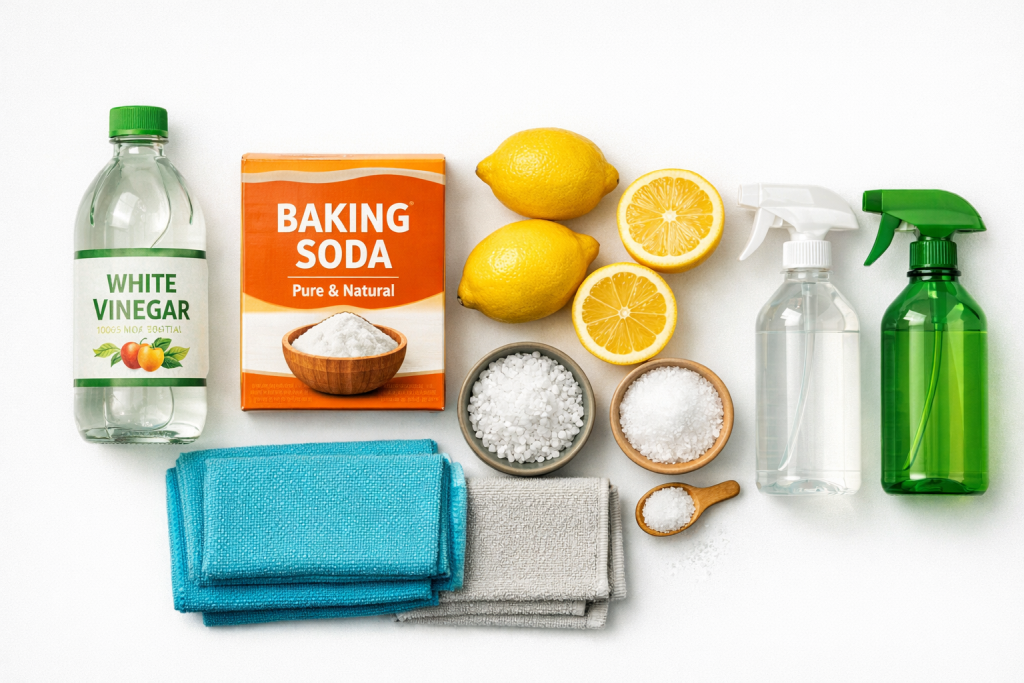
What You’ll Need
Natural Cleaning Agents:
- White distilled vinegar (5% acidity)
- Fresh lemons or lemon juice
- Baking soda
- Table salt or coarse salt
- Hydrogen peroxide (optional, for tough stains)
Tools and Supplies:
- Spray bottles
- Microfiber cloths
- Soft-bristle brush or old toothbrush
- Plastic bags and rubber bands (for faucets)
- Squeegee (for prevention)
- Rubber gloves
- Paper towels
Method 1: White Vinegar Soak (Most Effective)
Vinegar is the gold standard for removing hard water stains. The acetic acid in vinegar dissolves mineral deposits effectively, and it’s safe for most surfaces. This method works on faucets, fixtures, shower heads, and glass.
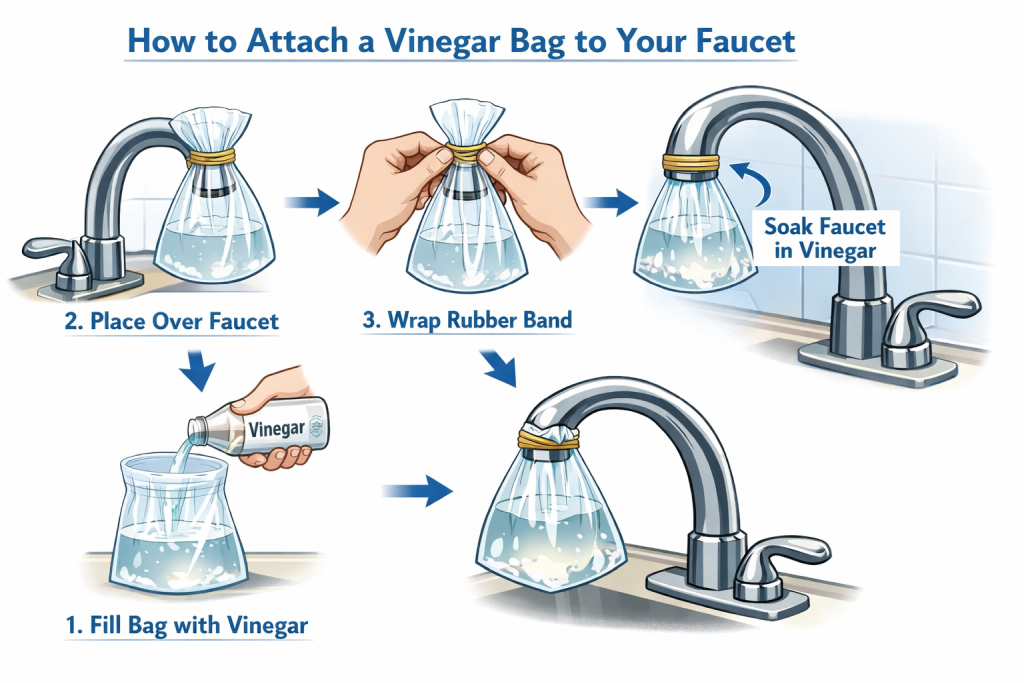
For Faucets and Fixtures:
- Fill a plastic bag with undiluted white vinegar (enough to submerge the faucet end)
- Secure the bag around the faucet with a rubber band, ensuring the stained areas are submerged
- Let it soak for 1-2 hours (or overnight for severe buildup)
- Remove the bag and scrub gently with a soft brush or cloth
- Rinse thoroughly with water
- Dry with a clean cloth to prevent new water spots
For Glass Shower Doors:
- Fill a spray bottle with equal parts white vinegar and water (50/50 solution)
- Spray generously on stained glass
- Let sit for 15-30 minutes (don’t let it dry)
- Scrub with a non-abrasive sponge or microfiber cloth
- Rinse with warm water
- Squeegee dry to prevent new spots
Pro tip: Heat vinegar in the microwave for 30 seconds before using – warm vinegar works faster and more effectively than cold. Never use vinegar on natural stone surfaces like marble or granite as the acid can etch them.
Method 2: Lemon and Salt Scrub
Lemon juice contains citric acid that breaks down mineral deposits, while salt provides gentle abrasive scrubbing power. This combination is especially effective on chrome fixtures and works quickly on moderate stains.
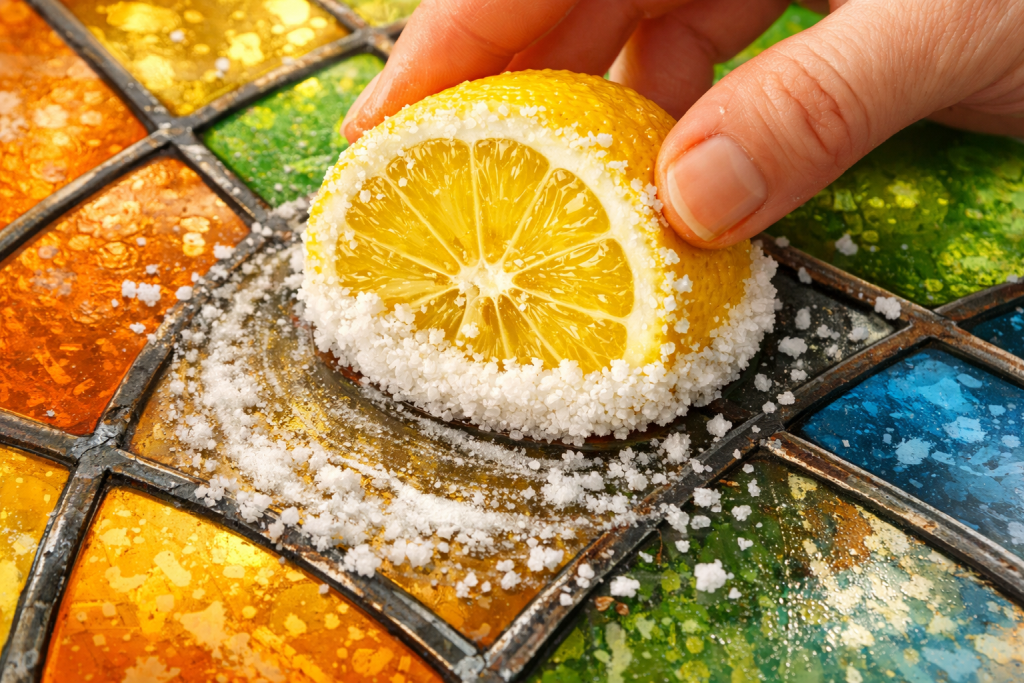
How to Use:
- Cut a lemon in half
- Dip the cut side in table salt or coarse salt
- Rub the salted lemon directly on hard water stains in circular motions
- For vertical surfaces, squeeze lemon juice onto the stain and sprinkle with salt
- Let sit for 5-10 minutes
- Scrub with a soft cloth or sponge
- Rinse thoroughly with water and dry
Best for: Chrome faucets, stainless steel sinks, ceramic tiles, glass surfaces (not too scratched).
Bonus benefit: Leaves a fresh citrus scent and natural shine without chemical residue.
Method 3: Baking Soda Paste
Baking soda is mildly abrasive and alkaline, making it perfect for scrubbing away mineral deposits without scratching surfaces. It works particularly well when combined with vinegar or water to form a paste.
Basic Baking Soda Method:
- Mix 3 parts baking soda with 1 part water to create a thick paste
- Apply the paste directly to hard water stains
- Let sit for 15 minutes
- Scrub in circular motions with a damp cloth or soft brush
- Rinse well and wipe dry
Super-Powered Combo (For Stubborn Stains):
- Sprinkle baking soda directly on the stain
- Spray white vinegar over the baking soda (it will fizz – that’s good!)
- Let the fizzing action work for 10 minutes
- Scrub and rinse
Best for: Sinks, tubs, tile, toilet bowls, non-porous surfaces. Safe for most materials.
Method 4: Clean Shower Heads by Soaking
Hard water clogs shower head spray holes with mineral deposits, reducing water pressure and creating uneven spray patterns. A vinegar soak restores full flow and removes buildup inside the head.
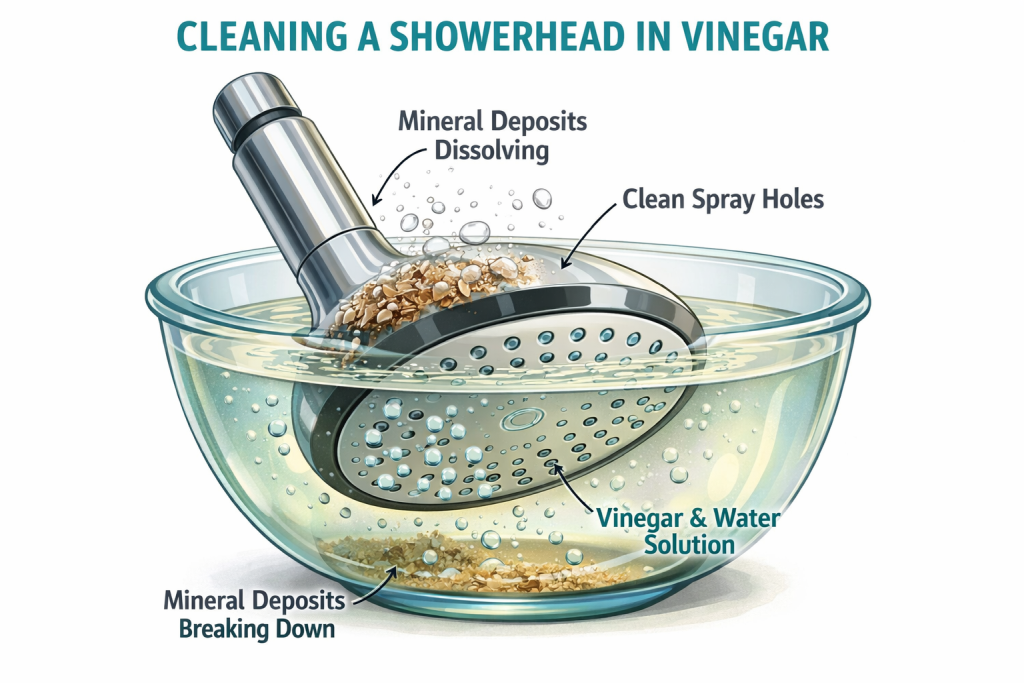
For Removable Shower Heads:
- Unscrew the shower head from the pipe arm
- Place it in a bowl or container filled with white vinegar (enough to fully submerge)
- Soak for 2-4 hours or overnight for heavy buildup
- Use an old toothbrush to scrub spray holes and threads
- Rinse thoroughly under running water
- Reattach to the shower arm
- Run hot water for a minute to flush out loosened deposits
For Fixed Shower Heads:
- Fill a plastic bag with vinegar
- Secure the bag over the shower head with a rubber band (submerge spray face)
- Leave for 2-4 hours
- Remove bag and scrub with a brush
- Run hot water to flush
If you’re dealing with slow drainage along with hard water stains, check out our guide on how to unclog your drain naturally.
Method 5: Hydrogen Peroxide Boost (For Tough Stains)
When vinegar alone isn’t cutting it, hydrogen peroxide combined with baking soda creates an oxidizing paste that tackles the most stubborn mineral buildup. This method is particularly effective on old, heavily stained surfaces.
Instructions:
- Mix 1/2 cup baking soda with 1/4 cup hydrogen peroxide (3% solution)
- Stir into a thick paste
- Apply generously to stained areas
- Let sit for 30 minutes (cover with plastic wrap if it starts drying)
- Scrub with a brush or abrasive sponge
- Rinse thoroughly and dry
Safety note: Hydrogen peroxide is generally safe but can bleach fabrics. Wear gloves and avoid contact with colored towels or clothing.
Best for: Bathroom tiles, grout, toilet bowls, extremely stubborn deposits that resist vinegar.
Method 6: Commercial CLR or Lime-Away (Last Resort)
If natural methods haven’t solved your problem, commercial hard water stain removers like CLR (Calcium Lime Rust) or Lime-Away contain stronger acids specifically formulated to dissolve mineral deposits. Use these only when necessary.
When to Use Commercial Products:
- Years of accumulated buildup
- Natural methods have failed after multiple attempts
- Extremely hard water (over 250 mg/L minerals)
- Time-sensitive cleaning needed
Important warnings:
- Always follow product directions exactly
- Test on an inconspicuous area first
- Never mix with other cleaning products (especially bleach)
- Wear gloves and ensure good ventilation
- Not safe for natural stone, brass, or some finishes – check label
- Rinse very thoroughly after use
Method 7: Prevention with Daily Maintenance
The best way to deal with hard water stains is preventing them from forming in the first place. A few seconds of daily maintenance saves hours of deep cleaning later.
Daily Prevention Habits:
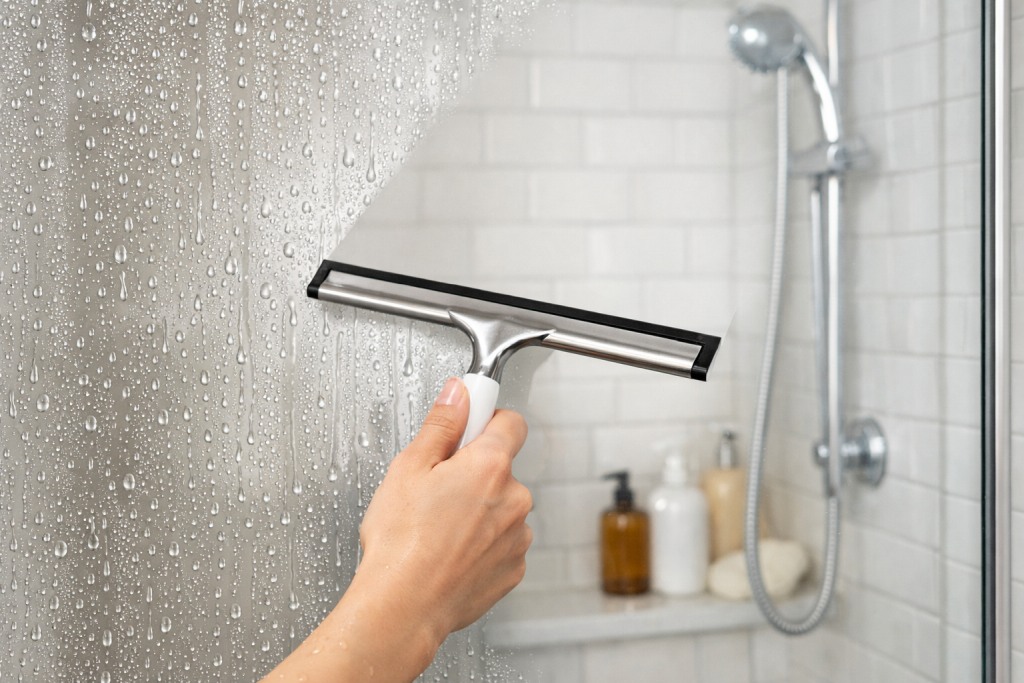
- Squeegee shower doors after every use (takes 30 seconds)
- Wipe down faucets and fixtures with a dry cloth after use
- Keep a microfiber cloth near each sink and shower
- Leave bathroom door or window open after showering to reduce humidity
- Run exhaust fan during and for 20 minutes after showering
Weekly Maintenance:
- Quick vinegar spray on shower doors and fixtures
- Wipe down all chrome and glass surfaces
- Check for early signs of mineral buildup
Long-Term Solutions:
- Install a water softener system (removes minerals before they reach fixtures)
- Apply Rain-X or water repellent coating to shower doors (causes water to bead and roll off)
- Replace old fixtures with ones featuring protective finishes
- Consider installing a shower filter to reduce mineral content
Hard water deposits can also damage faucet components over time, leading to leaks that require fixing leaky faucets sooner than normal.
Cleaning Guide by Surface Type
Chrome and Stainless Steel:
- Best methods: Vinegar soak, lemon and salt
- Avoid: Abrasive scrubbers that scratch the finish
- Polish with a drop of baby oil after cleaning for shine
Glass Shower Doors:
- Best methods: Vinegar spray, baking soda paste, dryer sheets (surprising but effective)
- For textured glass: Use a soft brush to get into crevices
- Apply water repellent treatment after cleaning
Ceramic Tile and Grout:
- Best methods: Baking soda paste, hydrogen peroxide combo
- Use old toothbrush for grout lines
- Seal grout after cleaning to prevent future staining
Natural Stone (Marble, Granite, Travertine):
- NEVER use vinegar or lemon (acid etches stone)
- Use only pH-neutral cleaners designed for stone
- Baking soda paste is safe for gentle cleaning
- Consider professional cleaning for heavy buildup
Toilet Bowls:
- Pour 2 cups vinegar into bowl, let sit overnight
- Scrub with pumice stone for waterline rings (won’t scratch porcelain)
- Baking soda and hydrogen peroxide paste for stubborn stains
Frequently Asked Questions
How do I know if I have hard water?
Common signs include white or cloudy spots on dishes and glassware, soap scum that won’t rinse off easily, reduced lather from soap and shampoo, white crusty buildup around faucets, and stiff or scratchy laundry. You can test your water hardness with an inexpensive test kit from hardware stores, or contact your water utility for a water quality report.
Will vinegar damage my fixtures or finishes?
Vinegar is safe for chrome, stainless steel, glass, ceramic, and most common bathroom fixtures. However, never use vinegar on natural stone (marble, granite, travertine), brass, bronze, or certain special finishes. When in doubt, test a small hidden area first and avoid leaving vinegar on surfaces for longer than 4 hours. Always rinse thoroughly after cleaning.
How often should I clean hard water stains?
Prevention is easier than removal. Wipe down surfaces daily after use to prevent stains from forming. Do a thorough cleaning with vinegar or other methods weekly if you have moderately hard water, or bi-weekly if your water is very hard. Once heavy mineral deposits form, they become exponentially harder to remove, so stay ahead of buildup.
Can hard water stains come back after cleaning?
Yes, absolutely. Hard water stains return as soon as mineral-rich water evaporates on cleaned surfaces. Unless you address the water hardness itself with a softener system, you’ll need ongoing maintenance. That’s why prevention techniques like squeegeeing shower doors and wiping fixtures dry are so important. These habits take seconds but prevent hours of future scrubbing.
Is a water softener worth the investment?
If you have very hard water and struggle with constant mineral buildup, a water softener ($400-$3,000 depending on type and size) can be worthwhile. Benefits include eliminating hard water stains, extending appliance lifespan, better soap performance, softer skin and hair, and cleaner dishes. For mild to moderate hard water, the cost may not justify the benefit – regular maintenance with vinegar works fine.
What’s the white powder that comes off when I scrub?
That white powder is dried mineral deposits – primarily calcium carbonate and magnesium. As you scrub with acidic cleaners like vinegar, the acid reacts with these alkaline minerals and breaks them down into powder that washes away. This is normal and exactly what you want to happen. The more powder you see, the more buildup you had. Keep scrubbing and rinsing until no more powder appears.
Can I prevent hard water stains in my dishwasher?
Yes. Use rinse aid in your dishwasher – it helps water sheet off dishes instead of forming droplets that leave spots. Add white vinegar to the rinse cycle (1 cup in bottom of empty dishwasher). Choose dishwasher detergent formulated for hard water. Run hot water at the sink before starting the dishwasher so it begins with hot water. For very hard water, install an inline water softener or filter specifically for the dishwasher.
Conclusion
Hard water stains are stubborn, but they’re not permanent. With the right natural cleaning methods – especially vinegar, lemon juice, and baking soda – you can remove even severe mineral buildup without resorting to harsh chemicals. The key is consistency: tackle stains when they first appear rather than waiting until they’ve hardened for months.
Remember that prevention saves you significant time and effort. A 30-second squeegee after showering prevents hours of scrubbing later. Wiping down faucets daily keeps them sparkling without deep cleaning sessions. These simple habits make living with hard water manageable.
Start with the gentlest method (vinegar) and only escalate to stronger solutions if needed. Most hard water stains respond beautifully to simple white vinegar, which is inexpensive, safe, and already in your pantry. Give your fixtures the shine they deserve – you’ll be amazed at the difference clean, stain-free surfaces make in your bathroom’s appearance.