
How to Save Money Fast: 15 Proven Methods That Work
You need £1,000 for an emergency fund. Or £500 for that unexpected car repair. Or just want to stop living paycheque to paycheque. You don`t know how to save money fast? Whatever your reason, you need to save money, and you need to do it quickly.
The problem? Most saving advice is either painfully slow (“skip your daily coffee for 30 years”) or completely unrealistic (“just stop eating out entirely”). You need practical methods that actually work in real life.
This guide gives you 15 proven ways to save money fast methods that real people use to build emergency funds, pay off debt, and achieve financial goals without feeling deprived. Some work immediately, others build momentum over weeks. Together, they can help you save hundreds or even thousands in the next few months.
Before implementing these saving tactics, you need a clear budget, learn how to create a budget that works for your actual life, not an idealized version of it.
Let’s start saving.
1. Automate Your Savings (The 10% Rule)
This is the single most effective saving method. Period.
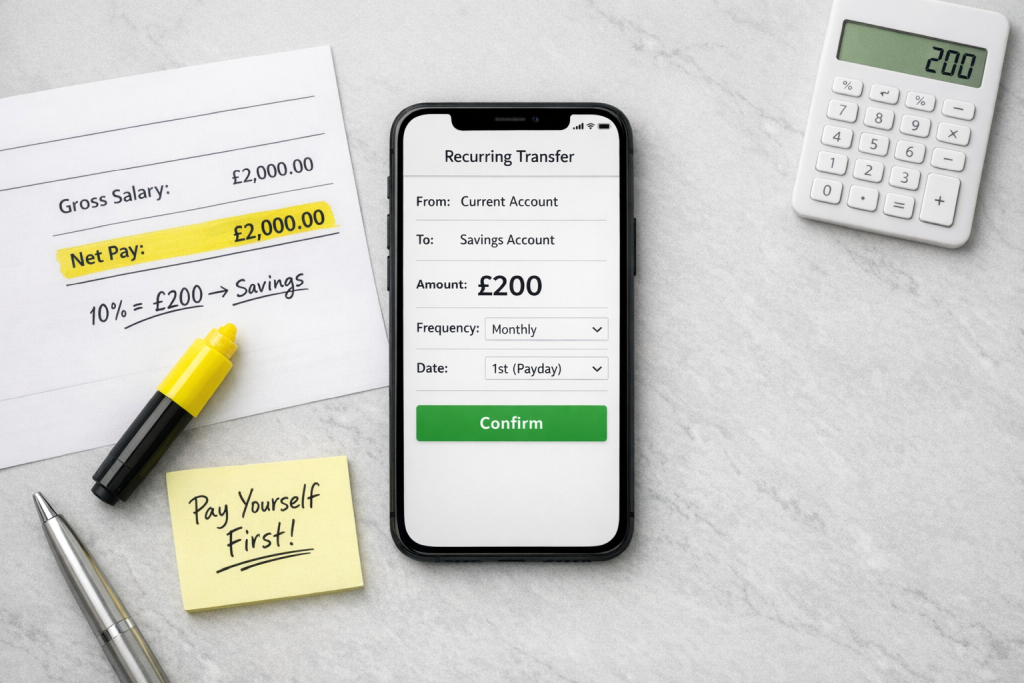
How it works:
Set up automatic transfer for 10% of your income on payday
Money goes directly to separate savings account
You never see it, so you don’t miss it
Adjust to 5% if 10% feels impossible (something is better than nothing)
Why it’s so effective: Human nature. We spend what we see. If £200 leaves your account automatically before you check your balance, you unconsciously budget around what remains. Saving becomes the default, not the afterthought.
Real numbers: Earning £2,000/month? That’s £200 saved monthly, £2,400 yearly. Completely automatic. No willpower required.
2. The 30-Day Rule for Non-Essential Purchases
Impulse purchases destroy savings goals. This simple rule eliminates most of them.
The rule:
- See something you want (not need)?
- Add it to a “30-day list” instead of buying
- After 30 days, if you still want it AND have the budget—buy it
- Most items? You’ll forget about them entirely
Results: Studies show 60-70% of items on 30-day lists never get purchased. That impulse fades. You realise you don’t actually need it. Average savings: £150-300/month for frequent online shoppers.
Pro tip: Keep the list in your phone notes. Include price and date. Review monthly. The psychological distance between wanting and buying is incredibly powerful.
3. Cancel Subscription Creep (Average Saves £60/Month)
“Subscription creep” is real. That free trial you forgot to cancel. The gym membership you haven’t used in months. The streaming service you watch once every three months.
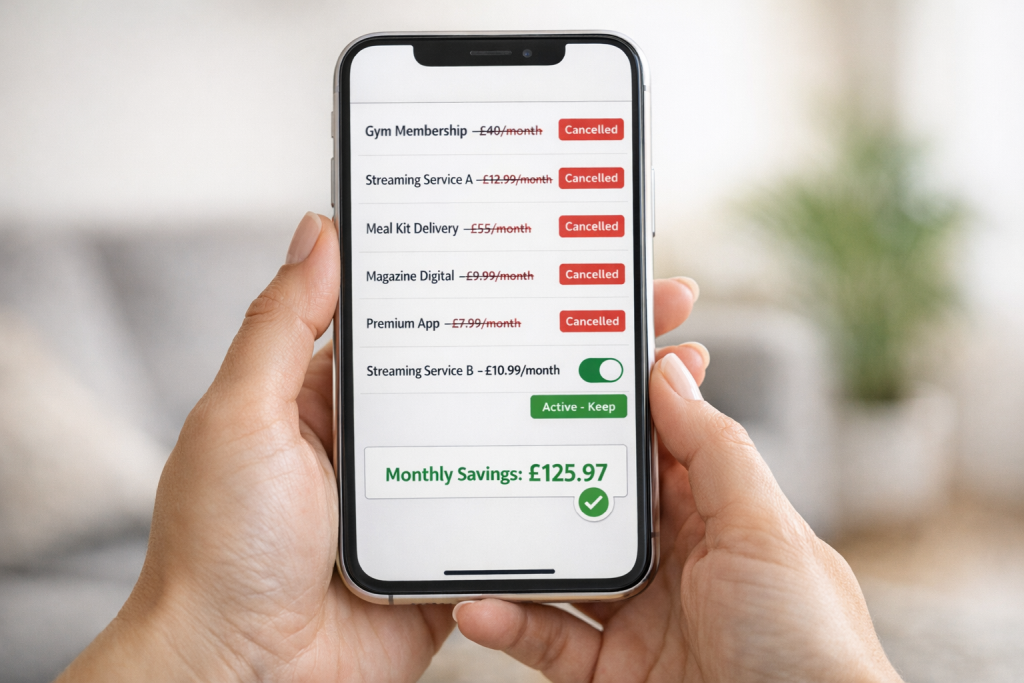
Audit process (takes 15 minutes):
- Check last 3 months of bank/credit card statements
- List every recurring charge
- For each subscription, ask: “Have I used this in the last month?”
- Cancel anything you haven’t actively used
Common subscription culprits:
- Gym membership (£40/month) – cancel if you haven’t gone in 3 months, use YouTube workouts instead
- Multiple streaming services (£10-15 each) – keep one, rotate others when specific shows air
- Meal kit delivery (£50-80/month) – convenient but expensive, switching to grocery shopping saves 60%
- Magazine subscriptions (£5-15/month) – read online for free at library
- Premium app subscriptions (£5-10 each) – free versions often sufficient
Smart compromise: Don’t cancel everything. Keep 1-2 subscriptions you genuinely use weekly. Cancel the rest. You can always resubscribe later.
4. Switch to High-Yield Savings Account (Free Money)
Most people keep savings in accounts earning 0.01% interest. Meanwhile, high-yield accounts offer 4-5%. That’s literally free money you’re leaving on the table.
The numbers:
- £5,000 at 0.01% interest: £0.50/year
- £5,000 at 4.5% interest: £225/year
- Difference: £224.50 annually for doing nothing
Money Saving Expert recommends comparing savings accounts regularly since interest rates change frequently, moving your money can earn hundreds extra annually.
Best options in UK:
- Easy-access savings: 4-5% interest, withdraw anytime
- Regular savers: 6-8% interest, must deposit monthly, limited withdrawals
- Fixed-term bonds: 5-6% interest, money locked for 1-5 years
Action: Takes 15 minutes to open account online. Move emergency fund there immediately. Check rates every 6 months.
5. Meal Plan and Batch Cook (Saves £150-250/Month)
Food is typically the second-largest flexible expense after housing. Small changes here create big savings.
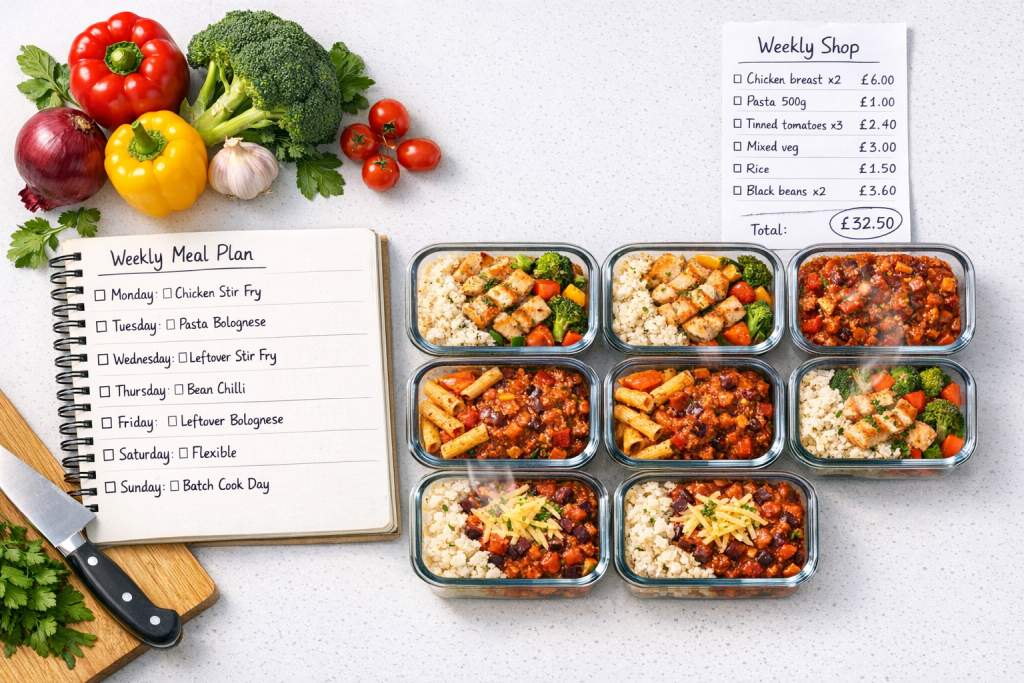
Simple system:
Sunday: Plan 5 dinners for the week (keep 2 nights flexible for leftovers/eating out)
Sunday: Create shopping list from recipes only
Sunday: Shop with list (don’t deviate)
Sunday: Batch cook 2-3 meals, portion into containers
Why it works:
- Eliminates “What’s for dinner?” panic that leads to takeaway
- Prevents impulse grocery purchases (stick to list)
- Reduces food waste (buy only what you need)
- Home cooking costs 60-70% less than takeaway/restaurants
Real savings:
- Takeaway 3x/week: £15 × 12 = £180/month
- Home-cooked meals: £5 × 12 = £60/month
- Monthly savings: £120
- Annual savings: £1,440
Beginner tip: Start with 3 meals/week. Choose simple recipes (one-pot meals, slow cooker, sheet pan dinners). Success builds motivation.
6. Use Cashback and Comparison Sites (Passive Income)
You’re buying things anyway. Get paid for it.
Essential tools:
- TopCashback/Quidco: Earn 3-15% on purchases you’d make anyway. Average user saves £250/year. Use for groceries, insurance, travel, electronics.
- MoneySavingExpert price comparison: Compare insurance, utilities, broadband before renewing. Switching saves £200-400/year.
- Credit card cashback: Some cards offer 0.5-1% cashback on all purchases. Only use if you pay off monthly (interest negates benefits).
Stack for maximum savings:
Example: Buying £100 laptop
Go through TopCashback (10% = £10)
Use cashback credit card (1% = £1)
Total saved: £11 on purchase you’d make anyway
Important: Only use for planned purchases. Don’t buy things just for cashback, that’s spending, not saving.
7. The No-Spend Challenge (Saves £200-500/Month)
Pick one category and don’t spend on it for 30 days. It’s surprisingly effective.
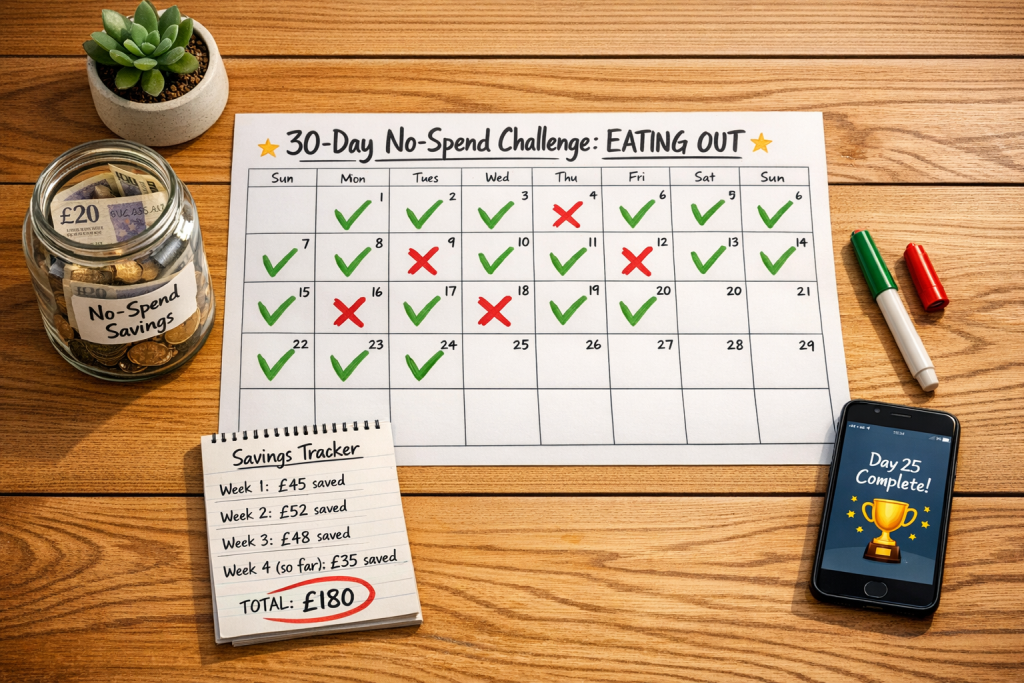
Popular categories:
- Eating out/takeaway (saves £120-200/month)
- Clothes shopping (saves £50-150/month)
- Entertainment/events (saves £80-150/month)
- Online shopping (saves £100-250/month)
- Coffee shops (saves £40-60/month)
Rules:
- Choose ONE category (trying to do everything fails)
- 30 days minimum (builds habit)
- Track savings in separate account (visual motivation)
- Find free alternatives (home coffee, library books, YouTube entertainment)
- Don’t compensate by overspending in other categories
- After 30 days: Most people realise they don’t miss it. Challenge often becomes permanent lifestyle change.
8. Downgrade Your Phone Contract (Saves £20-40/Month)
If you’re paying £40-60/month for a phone contract, you’re likely overpaying. Most people don’t need that much data.
The switch:
- When contract ends, switch to SIM-only deal (£5-15/month)
- Keep your existing phone (modern phones last 3-5 years easily)
- MVNOs like Smarty, giffgaff, Lebara offer excellent value
- Most people need 5-10GB data (WiFi at home/work covers rest)
- Savings: £50 contract → £10 SIM-only = £40/month saved = £480/year
9. Sell Unused Items (Immediate £200-500)
Your unused items are cash sitting in cupboards. Turn them into emergency fund money.

Best platforms:
- eBay: Electronics, collectibles, branded items
- Facebook Marketplace: Furniture, large items (local pickup)
- Vinted/Depop: Clothes and accessories
- Gumtree: Everything (local sales)
- CEX/MusicMagpie: Quick cash for tech/media (lower prices but instant)
- Quick wins:
- Old phones/tablets: £50-200
- Unused furniture: £30-150 each
- Clothes (good condition): £5-20 each
- Books/DVDs/games: £2-10 each
- Sports equipment: £20-100
One weekend declutter: £200-500 is realistic. Transfer directly to savings account.
10. Use the Library for Entertainment (Saves £30-50/Month)
Libraries aren’t just books anymore. Most offer free access to:
- Books, audiobooks, ebooks (Libby/BorrowBox apps)
- Magazines and newspapers
- Films and music
- Free WiFi and workspace
- Events, workshops, children’s activities
- Replaces: Kindle Unlimited (£8/month), Audible (£8/month), magazine subscriptions (£10/month), cinema occasionally. Total savings: £30-50/month.
11. DIY Basic Services (Saves £100-200/Month)
YouTube has tutorials for everything. Learn basic skills instead of paying others.
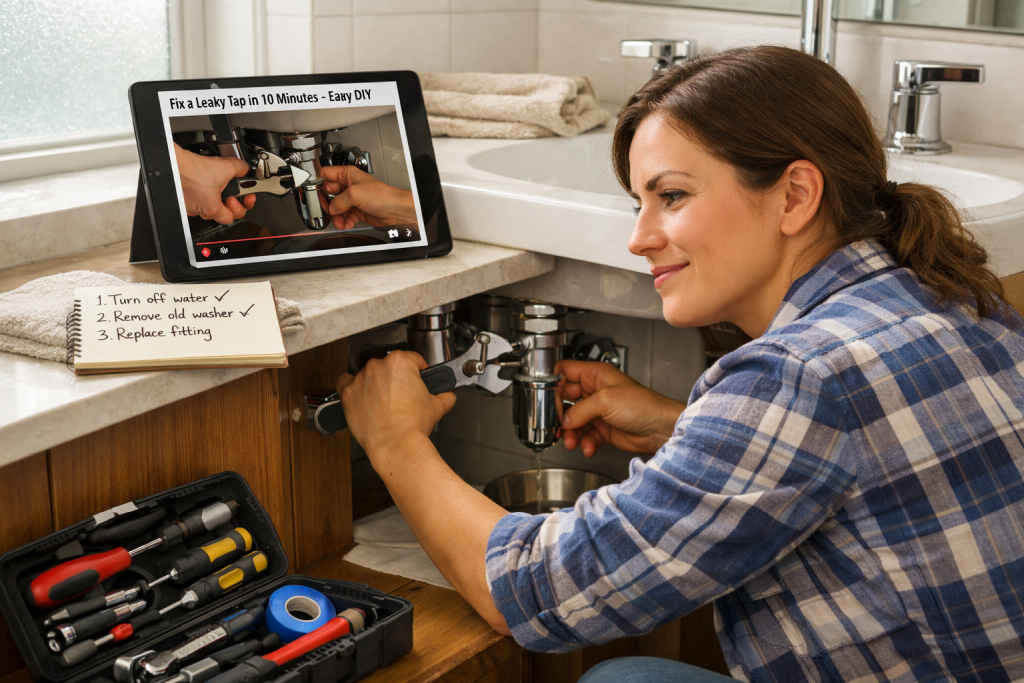
Easy DIY saves:
- Hair cuts: Learn to trim your own or partner’s (save £15-30/month)
- Basic car maintenance: Oil changes, air filter replacement (save £50-100/service)
- Home repairs: Leaky taps, painting, basic plumbing (save £50-200/job)
- Cleaning products: Make your own (vinegar, baking soda) (save £20/month)
- Pet grooming: Nail trimming, baths (save £30-60/month)
- Important: Know your limits. Complex electrical, structural, or safety-critical work should be done by professionals.
12. Negotiate Everything (One-Time Effort, Ongoing Savings)
Most people don’t negotiate because they assume the answer is no. But companies want to keep customers.
What to negotiate:
- Internet/phone bills: “I’m considering switching to [competitor]. Can you offer me a better rate?” (saves £10-30/month)
- Insurance: Get quotes from 3 competitors, call current provider with lowest quote (saves £100-300/year)
- Credit card interest: “I’m a good customer. Can you lower my APR?” (saves hundreds if you carry balance)
- Gym membership: “I’m thinking of cancelling. Can you offer a discount?” (saves £10-20/month)
- Medical bills: Ask for payment plans or discounts for paying in full (varies)
- Script that works: “I’ve been a loyal customer for [X] years. I’m considering switching to [competitor] who offers [lower price]. I’d prefer to stay with you. Can you match or beat that price?”
- Success rate: 50-70% if you’re polite, persistent, and have competing quote ready.
13. Walk or Cycle Short Journeys (Saves £40-80/Month
Transport is a huge expense. Small changes compound quickly.
The rule:
Anything under 2 miles (20-30 minute walk), don’t drive.
Savings:
- Fuel: £0.15/mile × 60 miles/month = £9
- Wear and tear on car: £0.10/mile × 60 miles = £6
- Parking fees avoided: £15-30/month
- Gym membership (since you’re exercising): £40/month
- Total monthly savings: £70-85
- Bonus: Better health, reduced stress, environmental benefit.
14. Claim All Tax Reliefs You’re Entitled To
Millions of pounds go unclaimed annually because people don’t realise they’re eligible.
Common reliefs:
- Working from home: £6/week (£312/year) for additional household costs
- Uniform/tools for work: Claim expenses if not reimbursed
- Professional subscriptions: If required for job
- Marriage allowance: Transfer £1,260 to spouse (saves £252/year)
- Charitable donations: Gift Aid adds 25%
If you work from home, you can claim tax relief for expenses like heating and electricity—the government website explains exactly how to apply.
How to claim:
GOV.UK website has simple online forms. Most claims take 10 minutes. You can backdate up to 4 years.
15. Start a Side Hustle (Extra £200-500/Month)
Sometimes the fastest way to save money is to earn more money.

Low-barrier side hustles:
- Freelance skills (writing, design, coding) on Upwork/Fiverr: £200-1,000/month
- Online tutoring in your expertise: £20-40/hour
- Dog walking/pet sitting (Rover, Tailster): £10-15/hour
- Food delivery (Deliveroo, Uber Eats): £8-12/hour
- Virtual assistant work: £15-25/hour
- Sell digital products (templates, courses) on Etsy/Gumroad: Varies widely
The rule:
100% of side income goes to savings/debt. Don’t inflate lifestyle. Extra £300/month = £3,600/year towards emergency fund or debt freedom.
Start small:
5 hours/week. Once established, scale up or maintain depending on goals.
Frequently Asked Questions
How much should I save each month?
Aim for 20% of take-home income if possible. If that’s unrealistic, start with 10% or even 5%. The habit matters more than the amount initially. As you pay off debt or earn more, increase the percentage. Minimum target: £100-200/month builds £1,200-2,400/year emergency fund.
What’s the fastest way to save £1,000?
Combine multiple methods: Sell unused items (£200-300), automate 10% savings (£150-250/month), cancel subscriptions (£60/month), no-spend challenge for 30 days (£150-200), switch to SIM-only phone (£40). Total: £600-850 in month 1, then £300-450/month ongoing. £1,000 achievable in 6-8 weeks.
Should I save or pay off debt first?
Build £500-1,000 emergency fund first (prevents going deeper into debt when emergencies happen). Then attack high-interest debt (credit cards 15%+) aggressively. Once that’s gone, build full 3-6 month emergency fund. Then tackle lower-interest debt while also investing. Order matters, it’s both mathematical and psychological.
How do I save money on a low income?
Start incredibly small, even £10/week = £520/year. Focus on no-cost methods first: meal planning, walking instead of driving, library entertainment, cancelling subscriptions, DIY services. Then add income-increasing tactics: side hustle, selling items, claiming tax reliefs. Every pound saved matters more on tight budget. Celebrate small wins to maintain motivation.
Is it worth saving if I’m in debt?
Yes, but strategically. Having zero savings while in debt is dangerous. One emergency forces you deeper into debt. Build £500-1,000 buffer first. This breaks the debt cycle. Then split money 50/50 between debt payments and continuing emergency fund growth until you have 1 month’s expenses saved. Then focus 80% on debt, 20% on savings.
How long does it take to see results?
Immediate methods (sell items, cancel subscriptions, switch phone contract) show results within days. Habit-based methods (meal planning, automatic savings, no-spend challenges) show results within 30-60 days. Most people save £200-400 in first month by combining 5-6 methods. Momentum builds month 3 savings typically exceed month 1 by 50-100%.
What if my partner isn’t on board with saving?
Start with shared goals discussion. “What do we want in 5 years?” is less confrontational than “You spend too much.” Suggest automating savings together for specific goal (holiday, house deposit). Lead by example, save your own money first, share results. Consider “yours, mine, ours” accounts where each saves individually plus shared savings. Financial counselling helps if fundamentally incompatible values.
Conclusion
Saving money fast isn’t about deprivation or giving up everything you enjoy. It’s about making strategic choices that align your spending with your actual priorities.
You don’t need to implement all 15 methods immediately. Pick 3-5 that feel most achievable for your situation. Start this week. Small actions compound into significant savings within months.
The fastest savers combine immediate tactics (selling items, cancelling subscriptions) with sustainable habits (automatic savings, meal planning). This creates both quick wins and long-term momentum.
These saving methods work best when paired with a solid budget, check our comprehensive budgeting guide to maximise your savings potential.
Your financial goals, whether it’s a £1,000 emergency fund, debt freedom, or simply breathing room in your budget, are closer than you think. Start today. Your future self will thank you.