How to Stop Snoring Naturally: 12 Proven Methods That Work
Your partner nudges you awake. Again. “You’re snoring,” they say. You apologize, roll over, and within minutes you’re snoring again. Or maybe you’re the one being kept awake by someone else’s chainsaw-like breathing. Either way, snoring destroys sleep quality for everyone in the bedroom.
According to research, 44% of middle-aged men and 28% of middle-aged women snore regularly, affecting not just their own sleep but their partners’ as well. Wondering how to stop snoring naturally? The good news? In most cases, snoring isn’t a permanent condition. With the right lifestyle changes and techniques, you can significantly reduce or eliminate snoring without surgery, devices, or medication.
This guide covers 12 scientifically proven methods to stop snoring naturally. From simple position changes you can try tonight to long-term lifestyle adjustments, these strategies address the root causes of snoring. Let’s get you (and your partner) sleeping peacefully again.
What Causes Snoring?
Snoring happens when air can’t move freely through your nose and throat during sleep. As you breathe in, the narrowed airway causes soft tissues in your throat to vibrate, creating the sound we call snoring.
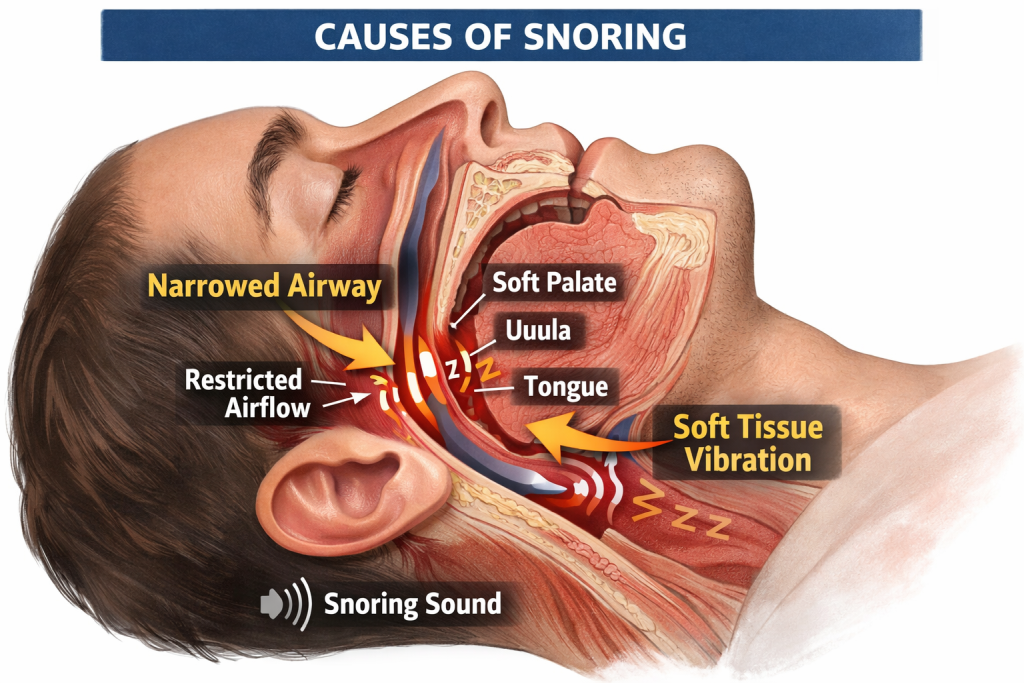
Common causes include:
- Sleeping on your back (gravity pulls tongue backward, blocking airway)
- Excess weight (extra tissue around neck narrows airway)
- Nasal congestion (allergies, colds, or structural issues)
- Alcohol consumption (relaxes throat muscles excessively)
- Aging (muscle tone decreases in throat)
- Anatomical factors (thick soft palate, enlarged tonsils, deviated septum)
- Smoking (inflames and narrows airways)
Understanding your specific cause helps you choose the most effective solutions. Now let’s fix it.
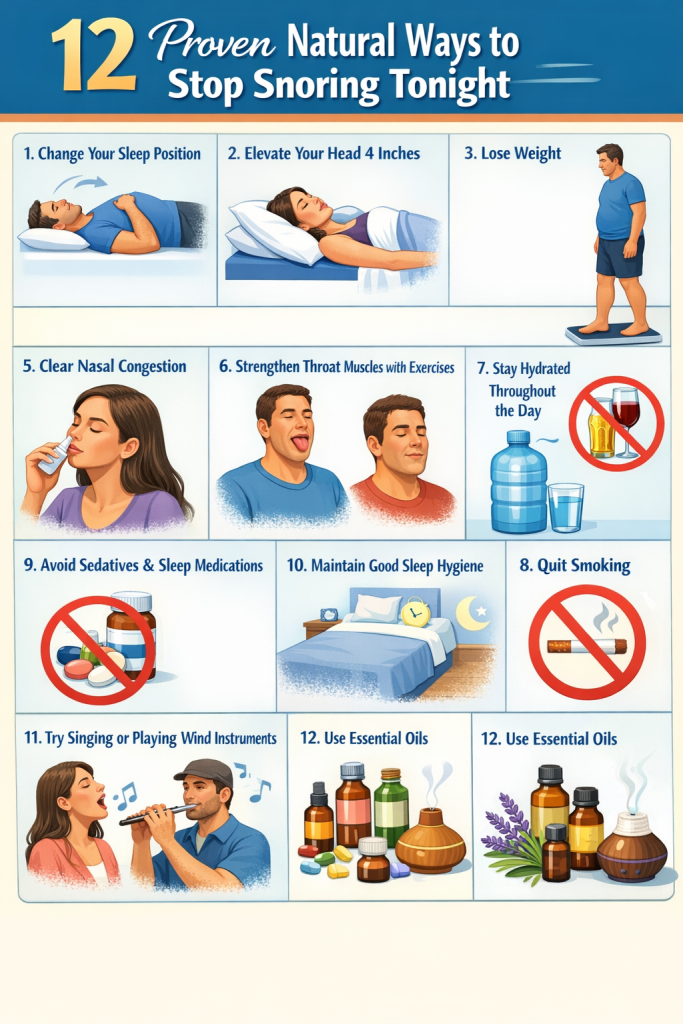
1. Change Your Sleep Position (Works Tonight)
This is the simplest and often most effective change you can make. Sleeping on your back causes your tongue and soft palate to collapse against the back of your throat. Side sleeping keeps your airway open.
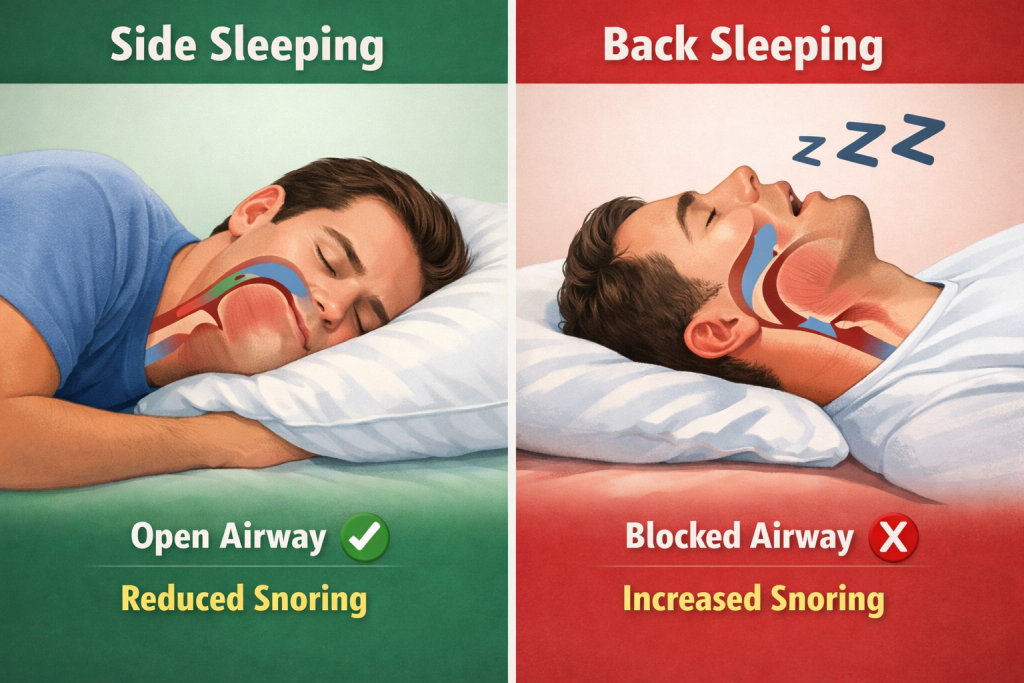
How to Stay on Your Side:
The tennis ball trick:
Sew a tennis ball into the back of your pajama top. When you roll onto your back, the discomfort makes you return to your side. Sounds crude, but studies show 87% effectiveness.
Body pillow:
Hug a full-length body pillow. It physically prevents you from rolling onto your back and provides comfort.
Wedge pillow:
Sleep with your back against a firm wedge pillow. Makes back sleeping uncomfortable.
Positional therapy device:
Wearable devices vibrate when you roll onto your back, training you to side sleep (available for $30-80). Most people see dramatic snoring reduction within the first night of consistent side sleeping. Give your body 3-7 days to adjust to the new position.
2. Elevate Your Head 4 Inches
Raising the head of your bed by 4 inches uses gravity to keep airways open. This is different from piling up pillows, which can actually worsen snoring by bending your neck.
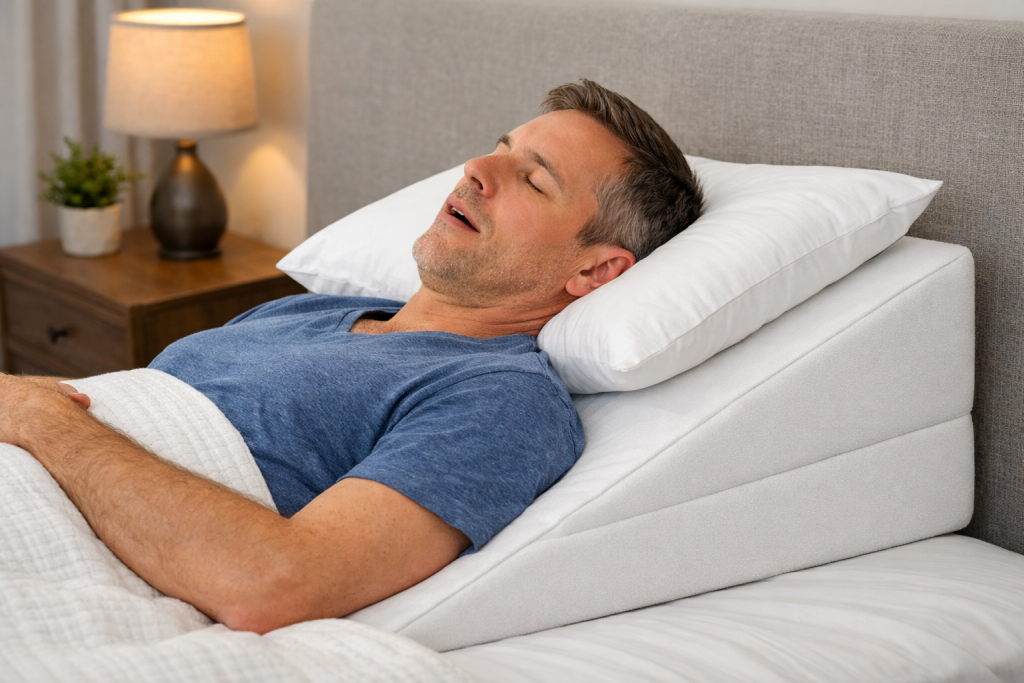
Methods:
- Place bed risers (4 inches) under the legs at the head of your bed
- Use an adjustable bed base to elevate the upper body
- Sleep on a wedge pillow designed for acid reflux or snoring (ensures proper angle)
Why it works: Elevation prevents tongue and soft palate collapse, reduces nasal congestion, and can help with acid reflux (which aggravates snoring).
3. Lose Weight (Even 10% Makes a Difference)
Excess weight, particularly around the neck, squeezes the airway from outside. Studies show that losing just 10% of body weight can significantly reduce snoring intensity and frequency.
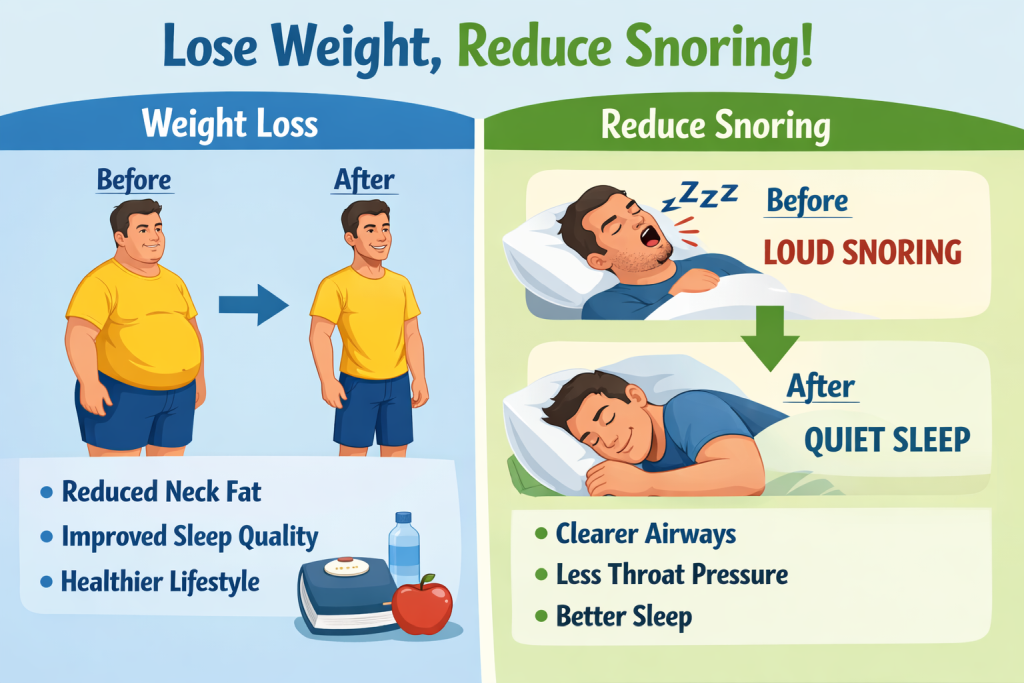
If your neck circumference is over 16 inches (women) or 17 inches (men), reducing it should be a priority. Even people at a healthy weight can have fatty deposits around the neck that contribute to snoring.
4. Avoid Alcohol 3-4 Hours Before Bed
Alcohol relaxes the muscles in your throat more than normal sleep does. This excessive relaxation causes your airway to collapse more easily, increasing both snoring likelihood and intensity.
The Facts:
- Even people who don’t normally snore will snore after drinking
- Alcohol also causes nasal congestion in some people
- The effect lasts 3-4 hours after your last drink
- Binge drinking has more severe effects than moderate consumption
5. Clear Nasal Congestion
Blocked or congested nasal passages force you to breathe through your mouth, which dramatically increases snoring. Clearing your nose can provide immediate relief.
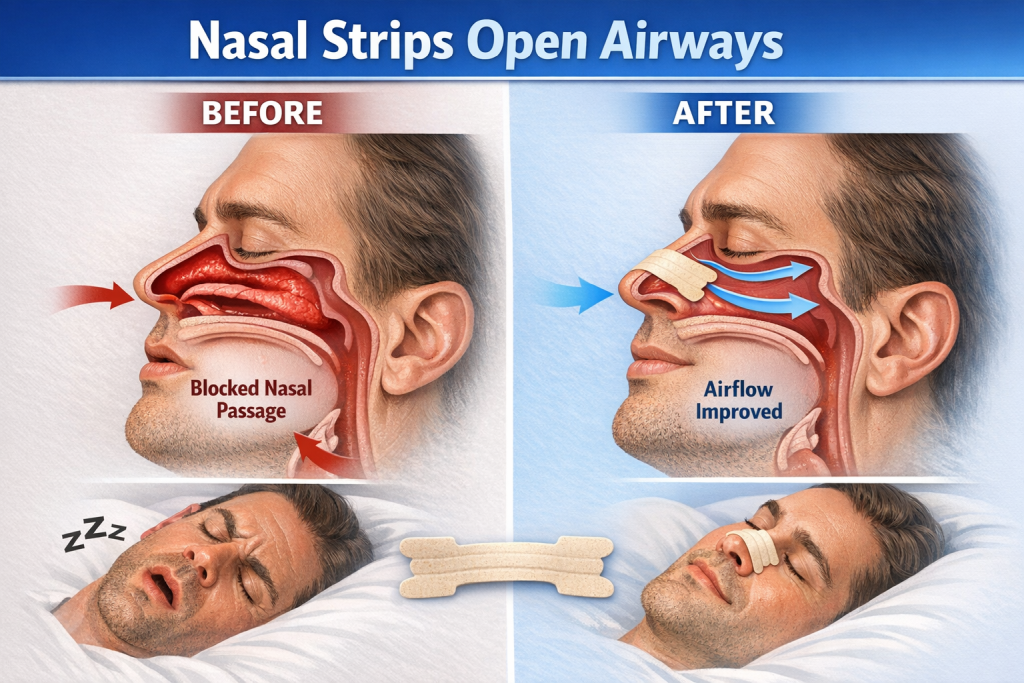
Immediate Solutions:
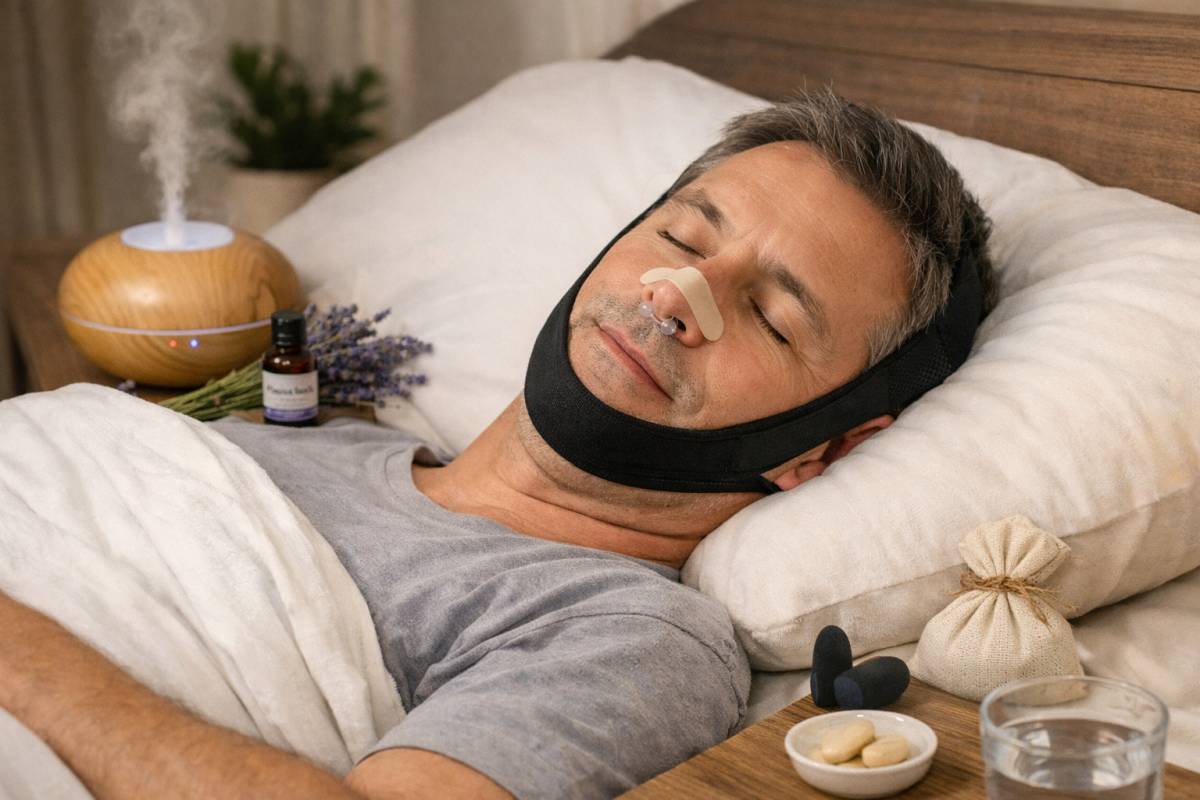
- Nasal strips: External adhesive strips mechanically open nasal passages
- Nasal dilators: Internal devices inserted into nostrils
- Saline rinse: Use a neti pot or nasal spray 30 minutes before bed
- Steam inhalation: Breathe steam from hot water for 5-10 minutes before bed
6. Strengthen Throat Muscles with Exercises
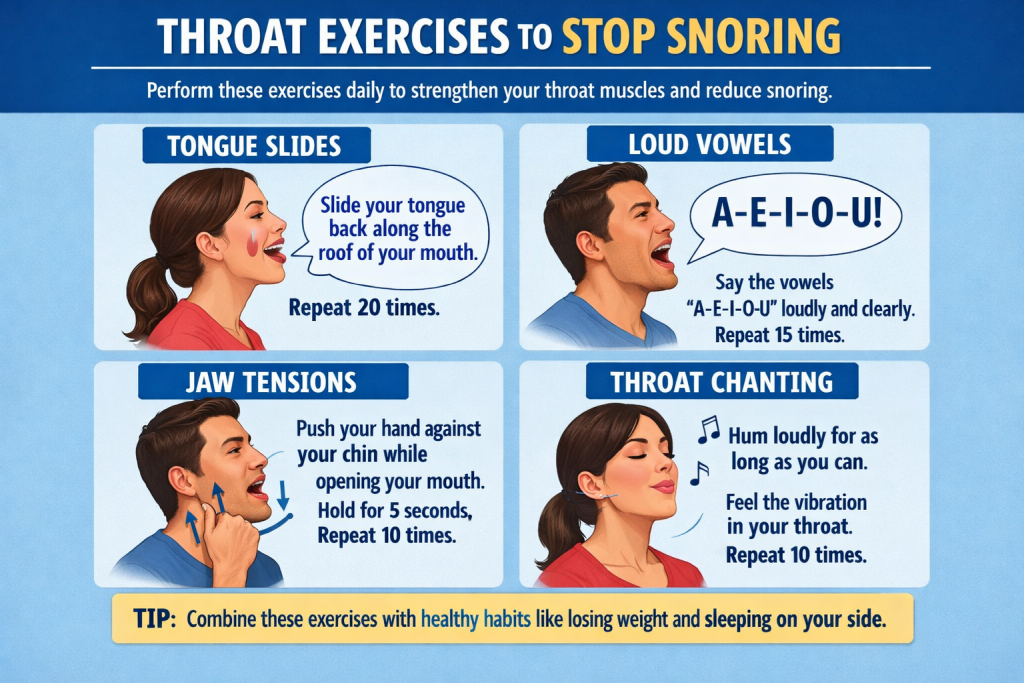
Effective Exercises (Do 3x Daily):
- Jaw opener: Open mouth wide, hold 10 seconds. Repeat 10 times.Weak throat muscles collapse more easily during sleep. Specific exercises can tone these muscles, reducing snoring by up to 50%.
- Tongue slide: Press entire tongue against roof of mouth, slide backward. Repeat 20 times.
- Pronounce vowels: Loudly pronounce each vowel (a-e-i-o-u) for 3 minutes
Results typically appear after 2-3 weeks of consistent practice.
7. Stay Hydrated Throughout the Day
Dehydration makes secretions in your nose and soft palate stickier, increasing snoring. When well-hydrated, these secretions remain fluid and less likely to cause vibration.
Guidelines:
- Men: 3.7 liters (125 oz) daily
- Women: 2.7 liters (91 oz) daily
- Drink most fluids earlier in day
- Use a humidifier if you live in a dry climate
8. Quit Smoking
Smoking irritates membranes in the nose and throat, causing swelling that narrows airways. Smokers are twice as likely to snore as non-smokers.
Timeline After Quitting:
- 1-2 weeks: Inflammation begins decreasing
- 1 month: Noticeable snoring reduction
- 3 months: Airway health significantly improved
- 6-12 months: Airway function nearly normalized
9. Avoid Sedatives and Sleep Medications
Sleep medications, muscle relaxants, and even antihistamines relax throat muscles excessively, worsening snoring.
Medications That Worsen Snoring:
- Benzodiazepines (Valium, Xanax)
- Z-drugs (Ambien, Lunesta)
- Older antihistamines (Benadryl)
- Muscle relaxants
- Some opioid pain medications
Even after stopping your snoring, you might still need help to fall asleep quickly – our guide covers 10 science-backed methods that work in minutes.
10. Maintain Good Sleep Hygiene
Sleep deprivation causes deeper, less restful sleep with more muscle relaxation – increasing snoring.
Essential Sleep Hygiene:
- Go to bed and wake up at the same time daily
- Aim for 7-9 hours per night
- Keep bedroom cool (65-68°F), dark, and quiet
- Avoid screens 1 hour before bed
Stopping snoring is just one part of improving your overall sleep quality – for a complete approach including sleep schedule and environment optimization, check our comprehensive guide.
11. Try Singing or Playing Wind Instruments
Research shows that singing and playing wind instruments strengthen the same throat muscles that prevent snoring.
How It Works:
- Singing tones soft palate and throat muscles
- Wind instruments train airway control
- Results appear after 3-4 weeks of daily practice
- No special talent required – just regular practice
12. Use Essential Oils
Certain essential oils have anti-inflammatory properties that can reduce nasal and throat swelling.
How to Use:
- Add 3-5 drops of eucalyptus or peppermint oil to a diffuser
- Mix 2 drops with carrier oil and apply to chest before bed
- Add to bowl of hot water for steam inhalation
Best for: Snoring caused by nasal congestion or minor throat inflammation.
When to See a Doctor
Mayo Clinic explains that chronic loud snoring with breathing pauses may indicate sleep apnea, a serious condition requiring medical treatment.
See a doctor if you experience:
- Pauses in breathing during sleep (partner-observed)
- Gasping or choking during sleep
- Excessive daytime sleepiness despite adequate sleep time
- Morning headaches
- Difficulty concentrating during the day
- High blood pressure
- Snoring that doesn’t improve with lifestyle changes after 3 months
Sleep apnea affects 22 million Americans and requires treatment with CPAP machines or other medical interventions.
Frequently Asked Questions
Can I stop snoring permanently?
Many people achieve 70-90% reduction through lifestyle changes. Some anatomical factors may require medical intervention. The key is identifying and addressing your specific causes.
How long does it take to stop snoring?
Immediate methods like position change work the first night. Throat exercises show results in 2-3 weeks. Weight loss impact appears gradually over months. Quitting smoking improves snoring within 2-4 weeks.
Does snoring get worse with age?
Yes, muscle tone decreases with age. However, throat exercises effectively counteract this. Many people in their 60s and 70s successfully reduce snoring.
Can women snore as much as men?
Absolutely. While more men snore, women can snore just as loudly. Women’s snoring often increases after menopause. The same solutions apply to both sexes.
Are anti-snoring devices worth it?
Nasal strips ($10-15) and positional aids ($30-80) are worth trying. Custom mouth guards are effective but expensive ($300-2,000). Try free methods first.
What’s the difference between snoring and sleep apnea?
Snoring is noise from vibrating tissues. Sleep apnea involves actual breathing pauses for 10+ seconds. Sleep apnea is dangerous and requires medical treatment.
My partner snores – what can I do?
Encourage them to try these methods. Use earplugs, white noise, or fans. Sleep separately if needed – it’s a health necessity, not relationship failure.
Conclusion
Snoring isn’t just an annoying noise – it’s a signal that your airway is partially blocked during sleep. While occasional snoring is normal, chronic loud snoring impacts your health, your sleep quality, and your relationships.
Start tonight with position changes and immediate adjustments. Add throat exercises and lifestyle improvements over the next few weeks. Most people see dramatic improvement within a month, with continued benefits as they address underlying causes.
Track your progress by having your partner rate your snoring nightly, or record yourself sleeping with a smartphone app. If these methods don’t significantly reduce your snoring after 3 months, consult a doctor.
Here’s to quieter nights and better sleep for everyone in your bedroom!