How to Unclog a Drain Without Chemicals: 8 Natural Methods
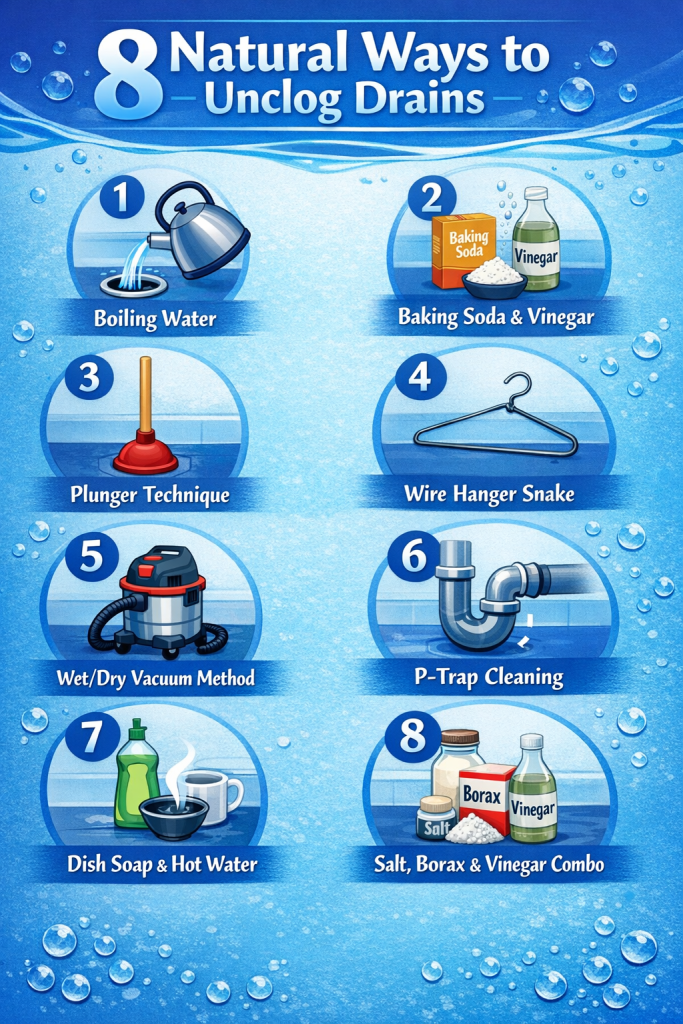
Standing water in your sink? Shower draining slower than molasses? A clogged drain is one of the most common household headaches, and while chemical drain cleaners promise quick fixes, they’re harsh, toxic, and can actually damage your pipes over time. Wondering how to unclog a drain? The good news? You don’t need caustic chemicals to clear most drain clogs. With simple household items and a little elbow grease, you can unclog your drain safely and effectively. This guide will show you 8 proven natural methods to tackle everything from minor slowdowns to stubborn blockages.
These chemical-free solutions are safer for your pipes, better for the environment, gentler on your wallet, and surprisingly effective. Let’s get that water flowing again.
What You’ll Need:
Most of these items are probably already in your home:
- Boiling water
- Baking soda (sodium bicarbonate)
- White vinegar
- Plunger (cup plunger for sinks, flange plunger for toilets)
- Wire coat hanger
- Wet/dry vacuum (shop vac)
- Bucket
- Adjustable wrench or pliers
- Rubber gloves
- Old towels
1. Start with Boiling Water (Easiest Fix)
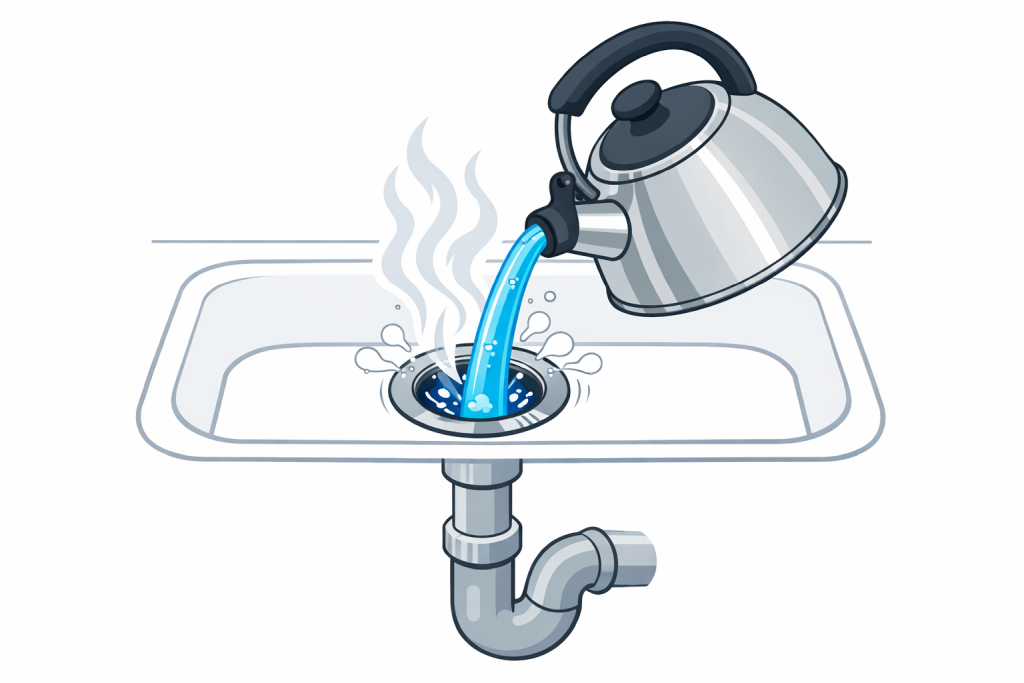
For minor clogs caused by grease, soap scum, or hair, boiling water alone can work wonders. This method costs nothing and takes less than a minute, making it the perfect first attempt before trying more involved solutions.
How to Do It:
- Boil a full kettle of water (about 2 liters or half a gallon)
- Remove standing water from the sink if possible
- Pour the boiling water directly into the drain in stages – pour about a cup, wait 5-10 seconds, then pour more
- Let it work for a few minutes
- Run hot tap water to flush everything through
Why it works: Boiling water melts grease and soap buildup that causes many clogs. The heat also helps loosen hair and other debris stuck to pipe walls.
Important warnings:
- Never use boiling water on toilets (the temperature shock can crack porcelain)
- Avoid this method if you have PVC pipes (check under your sink) – very hot water can soften PVC joints. Use hot tap water instead.
- Metal pipes can handle boiling water without issues
2. The Baking Soda and Vinegar Volcano (Most Popular)
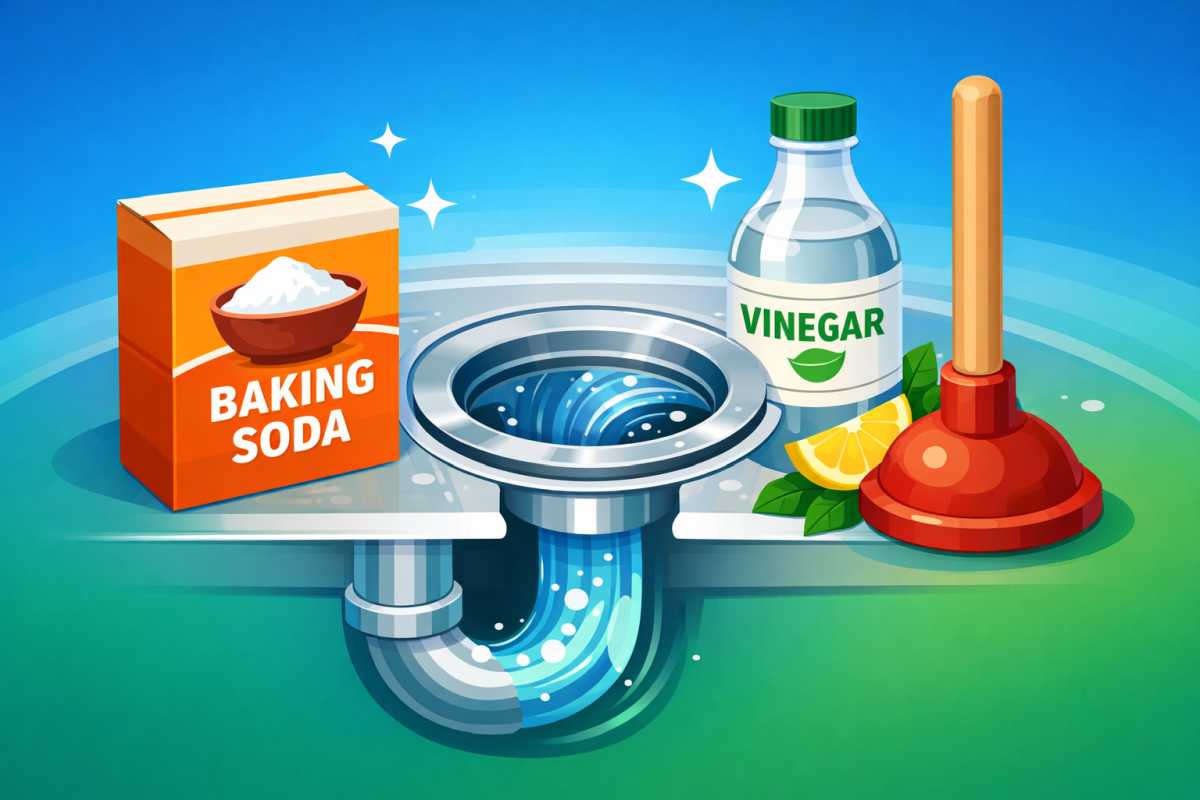
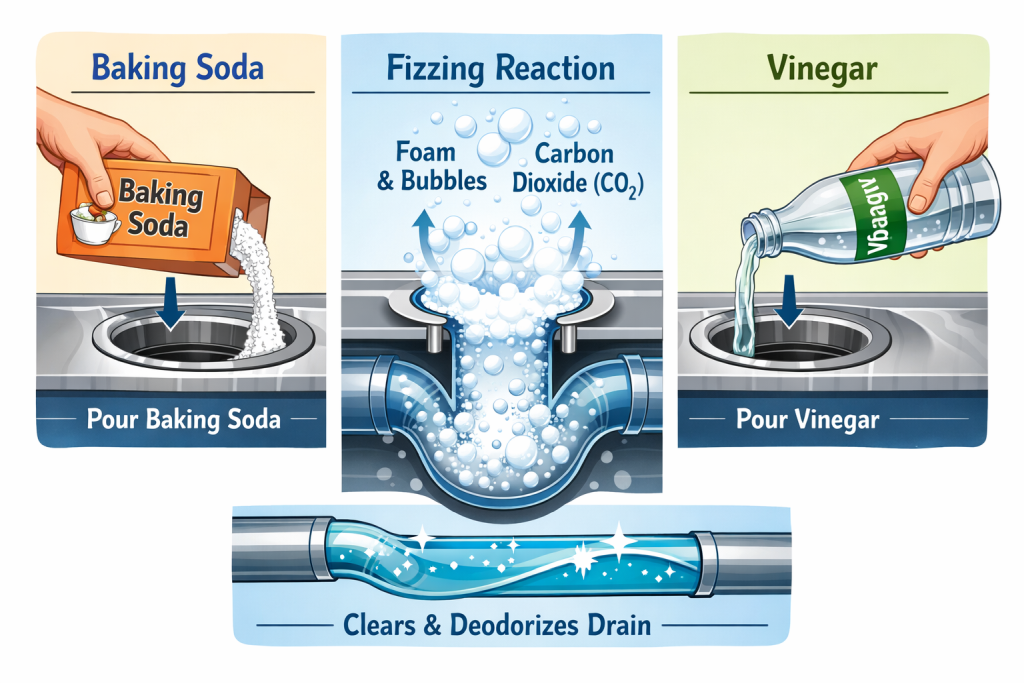
This classic combination creates a fizzing chemical reaction that breaks down organic matter and pushes clogs through pipes. It’s the go-to natural drain cleaner for good reason – it’s safe, effective, and you probably have both ingredients in your pantry right now.
Step-by-Step Instructions:
- Remove any visible debris or standing water from the drain
- Pour 1/2 cup of baking soda directly into the drain
- Follow immediately with 1 cup of white vinegar
- You’ll see and hear fizzing – this is the reaction working! Quickly plug the drain with a stopper or wet cloth to keep the reaction contained in the pipes
- Let it sit for 30 minutes (or overnight for stubborn clogs)
- Flush with hot water (or boiling water if you have metal pipes)
Why it works: The chemical reaction between sodium bicarbonate (baking soda) and acetic acid (vinegar) creates carbon dioxide bubbles that agitate and loosen debris. The fizzing action helps push material through the pipes while the alkaline baking soda breaks down grease and organic matter.
Pro tip: For extra cleaning power, add 1/2 cup of salt along with the baking soda before adding vinegar. Salt acts as an abrasive scrub for pipe walls.
Repeat if necessary: For persistent clogs, you can repeat this process 2-3 times. If there’s no improvement after multiple attempts, the clog may be too deep or severe for this method.
3. Use a Plunger the Right Way
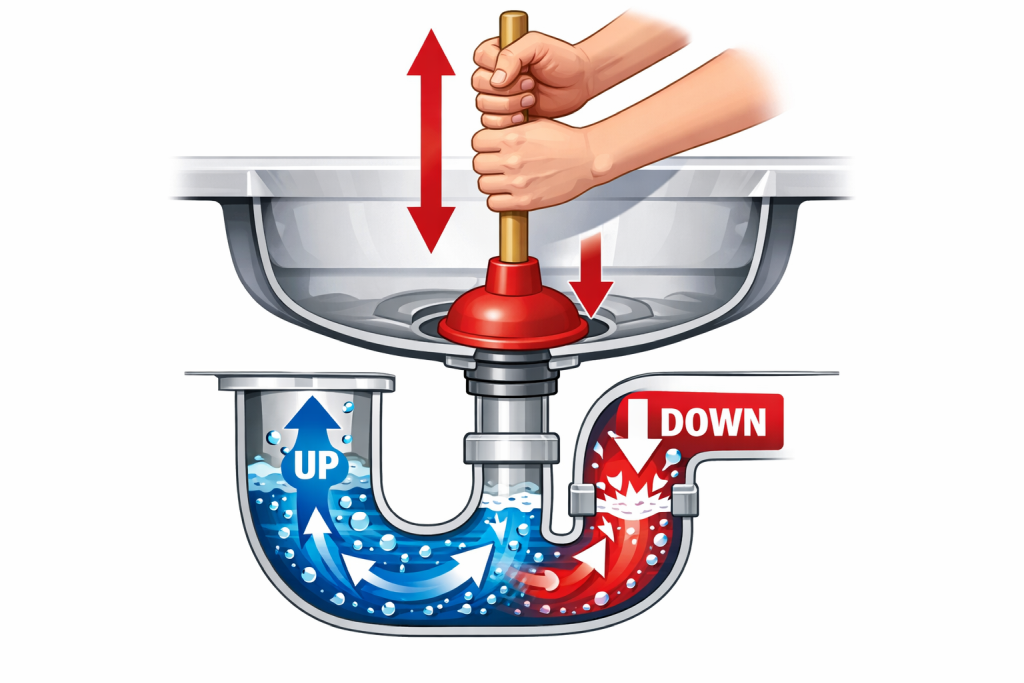
The trusty plunger isn’t just for toilets – it’s one of the most effective tools for sink and shower clogs too. Most people don’t realize there are proper techniques that make plunging far more effective.
Choosing the Right Plunger:
- Cup plunger: Flat bottom, for sinks and tubs
- Flange plunger: Has an extended rubber flap, for toilets
Proper Plunging Technique:
- Block the overflow opening (the hole near the top of sinks) with a wet cloth – this prevents air from escaping and makes plunging more effective
- Fill the sink with enough water to cover the plunger cup (about 2-3 inches)
- Place the plunger over the drain, creating a tight seal
- Push down slowly to force water into the drain, then pull up quickly to create suction
- Repeat this push-pull motion vigorously 15-20 times
- Break the seal and check if water drains
- If not cleared, repeat the process several more times
Common mistakes to avoid:
- Plunging without water (creates air pockets instead of pressure)
- Not blocking the overflow hole (lets pressure escape)
- Giving up too soon (may need 5-10 minutes of consistent plunging)
- Using wrong plunger type
4. Make a DIY Drain Snake from a Wire Hanger
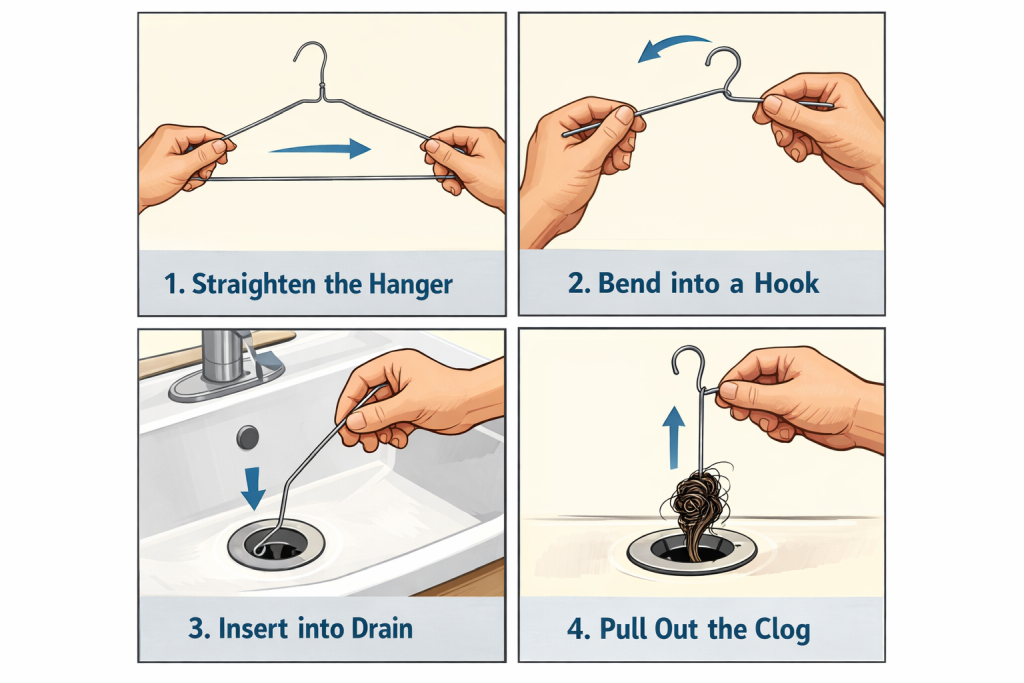
Hair clogs are the nemesis of bathroom drains, and they’re often too deep for plunging. A wire coat hanger transformed into a makeshift drain snake can reach down and physically extract the clog. This method is particularly effective for shower and bathtub drains.
How to Make and Use Your DIY Snake:
- Take a wire coat hanger and straighten it out as much as possible
- Create a small hook at one end by bending the wire (about 1/2 inch)
- Remove the drain cover or stopper if possible
- Push the hooked end into the drain slowly, wiggling and rotating as you go
- When you feel resistance, you’ve likely hit the clog – continue pushing gently while rotating
- Once you can’t push further, slowly pull the hanger back out
- You’ll likely pull out hair, soap scum, and other gross debris (prepare yourself!)
- Repeat several times until you stop pulling out material
- Follow up with hot water to flush remaining debris
Pro tips:
- Wear rubber gloves – this gets messy
- Be gentle to avoid scratching chrome or damaging pipes
- If a hanger doesn’t work, invest in a real drain snake ($10-30) for better reach and flexibility
- Plastic zip-it tools ($2-5) are designed specifically for hair removal and work even better
5. Employ a Wet/Dry Vacuum for Stubborn Clogs
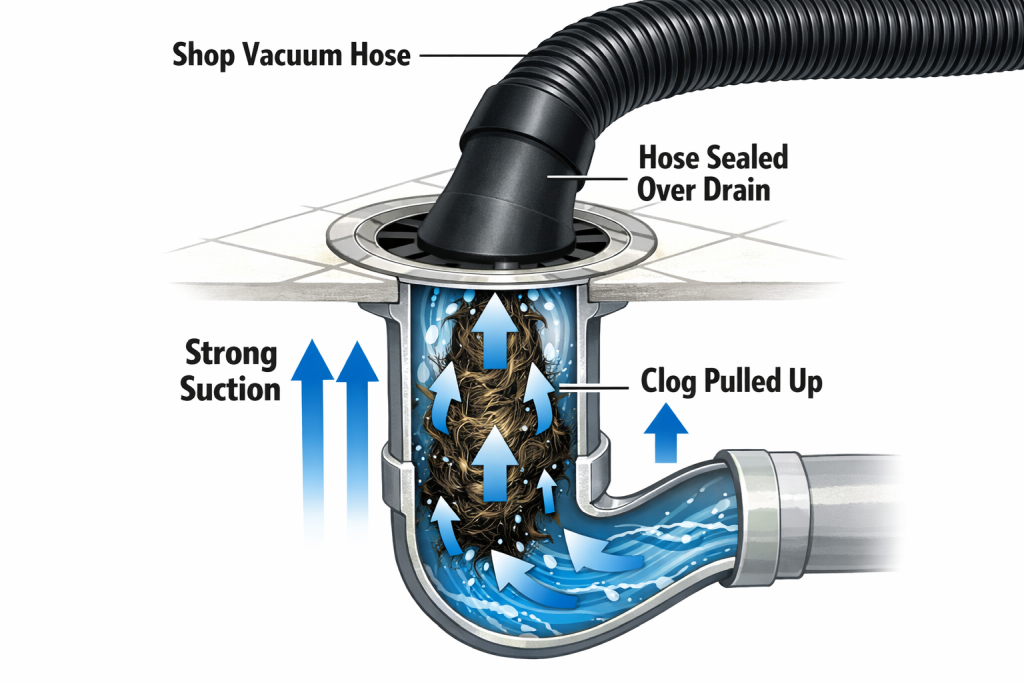
If you have a shop vacuum (wet/dry vac), it can create powerful suction to pull clogs right out of the drain. This method works surprisingly well for severe blockages that other methods can’t budge.
How to Use a Shop Vac:
- Set your vacuum to vacuum liquids (wet mode)
- Remove any standing water from the sink first
- Create the tightest seal possible between the vacuum hose and the drain opening
- You can wrap a wet towel around the hose to improve the seal
- Turn the vacuum to its highest setting
- Let it run for 1-2 minutes to create maximum suction
- The suction should pull the clog up and into the vacuum
- Test the drain with water
Important notes:
- Only use wet/dry vacuums – regular household vacuums are NOT designed for liquids and can be damaged or cause electrical hazards
- The seal is crucial – without it, you won’t get enough suction
- This works best for solid clogs (toys, jewelry, large debris) rather than grease or hair
6. Clean the P-Trap (For Serious Sink Clogs)
The P-trap is the U-shaped pipe section under your sink designed to trap debris and prevent sewer gases from entering your home. Unfortunately, this design also means it’s where most sink clogs occur. Cleaning it directly is highly effective but requires basic plumbing skills.
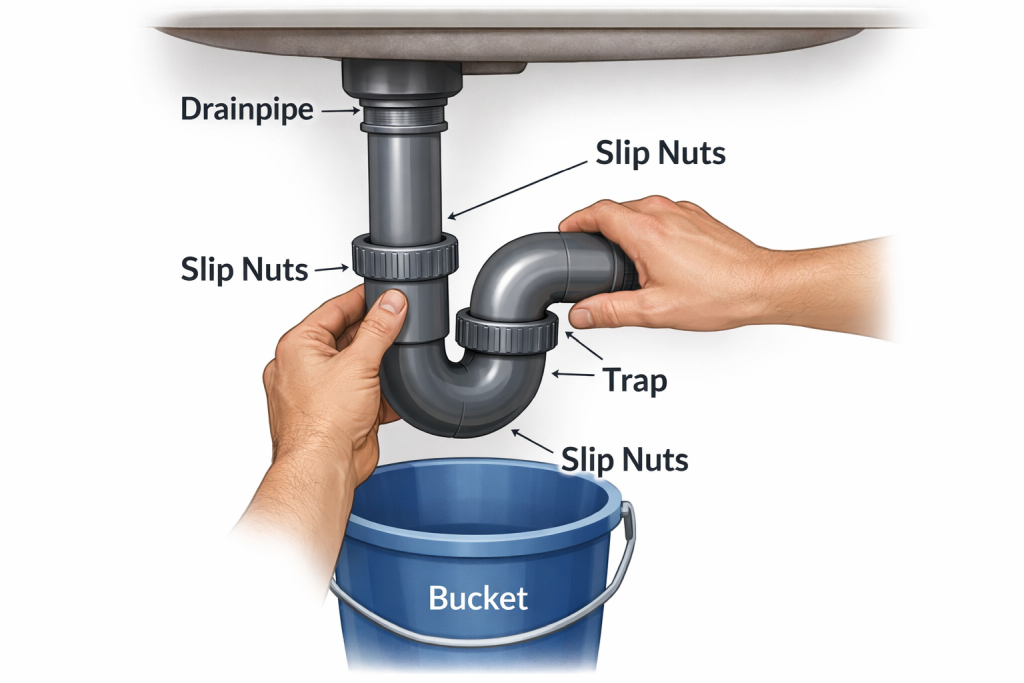
Step-by-Step P-Trap Cleaning:
- Place a bucket directly under the P-trap to catch water
- Lay down old towels to catch any spills
- Locate the slip nuts on both ends of the P-trap (these connect the trap to the pipes)
- Loosen the slip nuts by hand or with adjustable pliers (turn counterclockwise)
- Carefully remove the P-trap – water and gunk will pour out into your bucket
- Take the P-trap outside or to another sink and clean it thoroughly with a brush, hot water, and dish soap
- Check the tailpiece (vertical pipe from sink) and wall pipe for additional debris
- Reassemble the P-trap, hand-tightening the slip nuts first
- Give a final quarter-turn with pliers (don’t overtighten – you could crack the plastic)
- Run water and check for leaks
Pro tips:
- Take a photo before disassembling so you remember how it goes back together
- This is a good time to check rubber washers inside the slip nuts – replace if worn
- If slip nuts are corroded or won’t budge, apply penetrating oil and wait 10 minutes
- While the trap is off, you can also snake directly into the wall pipe for deeper clogs
7. Use Dish Soap and Hot Water (For Grease Clogs)
Kitchen sink clogs are often caused by grease and oil that solidifies in pipes. Dish soap is specifically designed to break down grease, making it an effective natural drain cleaner when combined with hot water.
How to Use Dish Soap:
- Squirt about 1/4 cup of liquid dish soap directly into the drain
- Let it sit for 5 minutes to penetrate the clog
- Boil a kettle of water (or heat water to near-boiling if you have PVC pipes)
- Pour the hot water slowly into the drain in stages
- Wait 5 minutes, then flush with more hot water
- Follow up with plunging if needed for extra effectiveness
Why it works: Dish soap acts as a lubricant that helps grease clogs slide through pipes. The hot water liquefies solidified fats and oils, allowing the soap to emulsify them and wash them away.
Best for: Kitchen sinks, garbage disposals, grease-related clogs
8. Salt, Borax, and Vinegar Combo (Heavy-Duty Natural Cleaner)
For particularly stubborn clogs that haven’t responded to other methods, this powerful three-ingredient combination provides a more aggressive natural solution. Borax (sodium borate) is a natural mineral compound that’s stronger than baking soda but still safe for pipes.
The Powerful Trio Method:
- Mix 1/4 cup salt and 1/4 cup borax in a cup
- Pour the mixture directly into the drain
- Follow with 1/2 cup of vinegar
- Let the mixture sit for at least 1 hour (or overnight for severe clogs)
- Flush with a kettle of boiling water
Why it works: Salt acts as an abrasive that scrubs pipe walls. Borax is a natural cleaner and deodorizer that breaks down organic matter. Vinegar provides the acidic reaction that helps dissolve buildup. Together, they create a more powerful cleaning action than baking soda and vinegar alone.
Where to find borax: Available in the laundry detergent aisle at most grocery stores (20 Mule Team Borax is a common brand).
Safety note: While borax is natural, keep it away from children and pets. Use in well-ventilated areas.
Preventing Future Drain Clogs
The best clog is the one that never happens. These simple habits will keep your drains flowing freely:
Daily and Weekly Habits:
- Run hot water through the drain after every use (30 seconds minimum)
- Use drain strainers or hair catchers in all drains (invest $5 now, save $200 in plumber fees later)
- Brush hair before showering to catch loose strands
- Never pour grease, oil, or coffee grounds down the drain (collect in a container and trash it)
- Wipe greasy pans with paper towels before washing
- Clean drain stoppers weekly – they accumulate hair and gunk quickly
Monthly Maintenance:
- Flush drains with boiling water once a week
- Do a preventive baking soda and vinegar treatment monthly
- Check and clean P-traps every 6 months
- Inspect drain stoppers and replace if damaged
What NOT to put down drains:
- Cooking oil and grease
- Coffee grounds
- Eggshells
- Flour or other starches (expand and become paste)
- Rice and pasta (continue absorbing water and swelling)
- Paper towels, cotton swabs, dental floss
- Medication or harsh chemicals
- Paint or solvents
When to Call a Professional Plumber
While these natural methods solve most clogs, some situations require professional help:
- Multiple drains clogged simultaneously (indicates a main line problem)
- Sewage backing up into tubs or sinks
- Persistent clogs that return immediately after clearing
- Foul sewage odors that won’t go away
- Gurgling sounds from multiple drains
- Standing water that won’t drain at all after trying these methods
- You’ve accidentally dropped jewelry or valuables down the drain
- Visible pipe damage or leaks
These issues often indicate problems in your main sewer line, vent stack, or beyond the reach of DIY solutions. A professional plumber has specialized equipment like powered augers, hydro-jetters, and camera inspection tools to diagnose and fix serious drainage issues.
Frequently Asked Questions
Are chemical drain cleaners really that bad for pipes?
Yes, chemical drain cleaners like Drano or Liquid-Plumr contain harsh caustic chemicals (sodium hydroxide or sulfuric acid) that generate heat to dissolve clogs. This extreme heat can damage pipes over time, especially PVC and old metal pipes. They’re also dangerous for your health, terrible for the environment, and often only provide temporary fixes. Natural methods are safer, cheaper, and usually just as effective.
How long should I wait between trying different unclogging methods?
If one method doesn’t work, you can try another immediately in most cases. However, if you’ve used baking soda and vinegar, flush thoroughly with hot water before trying another chemical method. For physical methods like plunging or snaking, you can switch between them without waiting. Start with the gentlest methods first and progress to more aggressive techniques.
Will baking soda and vinegar damage my pipes?
No, baking soda and vinegar are completely safe for all types of pipes including PVC, metal, and modern composites. The fizzing reaction you see is simply carbon dioxide gas being released – it’s not corrosive or damaging. This combination is far gentler than commercial chemical cleaners and won’t harm your plumbing system even with frequent use.
Can I use these methods on a garbage disposal?
Yes, most of these methods work for garbage disposals. Baking soda and vinegar, dish soap and hot water, and boiling water methods are all safe for disposals. However, avoid using wire hangers or hard tools that could damage the disposal blades. For disposal-specific cleaning, try ice cubes and rock salt: pour 2 cups ice and 1 cup rock salt into the disposal, run cold water, and turn it on for 10 seconds to clean the blades.
Why does my drain still smell bad even after unclogging it?
Lingering odors usually mean biofilm (bacterial buildup) remains on pipe walls even though water flows freely. Pour 1/2 cup baking soda down the drain, follow with hot water, and let sit overnight. The next morning, flush with more hot water. You can also try citrus peels in the garbage disposal, or pour 1 cup white vinegar and let it sit for 30 minutes before flushing. For persistent smells, the P-trap might need cleaning.
How often should I clean my drains preventatively?
For kitchen sinks, flush with boiling water weekly and do a baking soda-vinegar treatment monthly. Bathroom drains benefit from weekly hot water flushes and bi-monthly deep cleaning. Clean drain stoppers and strainers weekly. This regular maintenance prevents most clogs from forming and keeps drains smelling fresh. Think of it like brushing your teeth – a little prevention prevents big problems.
Is it safe to leave baking soda and vinegar in the drain overnight?
Absolutely. In fact, leaving the mixture overnight gives it more time to break down stubborn clogs and buildup. The chemical reaction stops after about 30 minutes, but the alkaline baking soda continues working to dissolve grease and organic matter. Just plug the drain to keep the solution in the pipes rather than evaporating, and flush with hot water in the morning.
Conclusion
You don’t need harsh chemicals to unclog your drains effectively. From simple boiling water to the trusty baking soda and vinegar volcano, these 8 natural methods can handle virtually any household drain clog safely and affordably. Start with the easiest solutions first, and work your way up to more involved methods only if needed.
Remember that prevention is your best defense against clogs. Use drain strainers, avoid pouring grease down sinks, and perform monthly maintenance with hot water or baking soda treatments. These simple habits will keep your drains flowing freely and save you from future headaches and expensive plumber bills.
The methods in this guide work for most common clogs, but don’t hesitate to call a professional plumber if you’re dealing with persistent issues, multiple clogged drains, or sewage backups. Some problems require specialized equipment and expertise beyond DIY solutions.